

How to Store TMT Bars at Construction Sites in Gujarat: A Practical Guide
September 8, 2026
July 10, 2026
India is building infrastructure at an extraordinary scale.
Highways, bridges, ports, industrial facilities, logistics parks, urban developments, renewable energy projects, and public infrastructure are being designed to serve growing cities and industries for decades.
But building infrastructure is only one part of the challenge.
Ensuring that structures continue to perform reliably throughout their intended service life is equally important.
Among the many factors that can affect the durability of reinforced concrete structures, corrosion of reinforcement steel remains a significant concern—particularly in coastal regions, high-humidity environments, industrial zones, and structures exposed to aggressive environmental conditions.
As infrastructure projects become larger and expectations around durability increase, corrosion resistance is becoming an increasingly important consideration during material selection.
Reinforced concrete combines two materials that work extremely well together.
Concrete provides compressive strength, while reinforcement steel helps the structure resist tensile forces.
Under normal conditions, the alkaline environment within concrete helps protect embedded reinforcement. However, over time, environmental exposure and deterioration of the surrounding concrete can affect this protection.
Factors that may contribute to reinforcement corrosion include:
Once corrosion begins, the resulting deterioration can affect both the reinforcement and the surrounding concrete.
Corrosion is sometimes viewed as a cosmetic issue.
In reinforced concrete structures, however, its effects can extend much further.
As reinforcement corrodes, corrosion products occupy more volume than the original steel. This expansion can create internal pressure within the surrounding concrete.
Over time, this may contribute to:
This is why corrosion prevention is increasingly considered during the design and material selection stages of infrastructure projects.
India's geography creates a wide range of construction conditions.
Infrastructure projects may be exposed to:
A reinforcement solution suitable for one environment may not necessarily be the most appropriate choice for another.
This is why engineers and project teams increasingly evaluate exposure conditions before selecting reinforcement materials.
India has an extensive coastline and several major cities, ports, industrial zones, and infrastructure developments located near marine environments.
Coastal conditions can expose structures to moisture and chlorides, increasing the risk of reinforcement corrosion.
Structures that may require greater consideration of corrosion resistance include:
For these projects, reinforcement selection can play an important role in long-term durability planning.
Corrosion risks are not limited to coastal regions.
Industrial environments can expose structures to chemicals, moisture, heat, and other aggressive conditions.
Manufacturing facilities, wastewater treatment plants, chemical industries, processing facilities, and infrastructure located in industrial environments may require additional consideration during material selection.
Choosing reinforcement based on actual project exposure conditions can help engineers develop a more appropriate durability strategy.
Durability problems are difficult and expensive to address after construction is complete.
This is why corrosion resistance should be considered during the planning and design stages of a project.
Project teams may evaluate:
By considering these factors early, developers and engineers can make more informed decisions about reinforcement solutions.
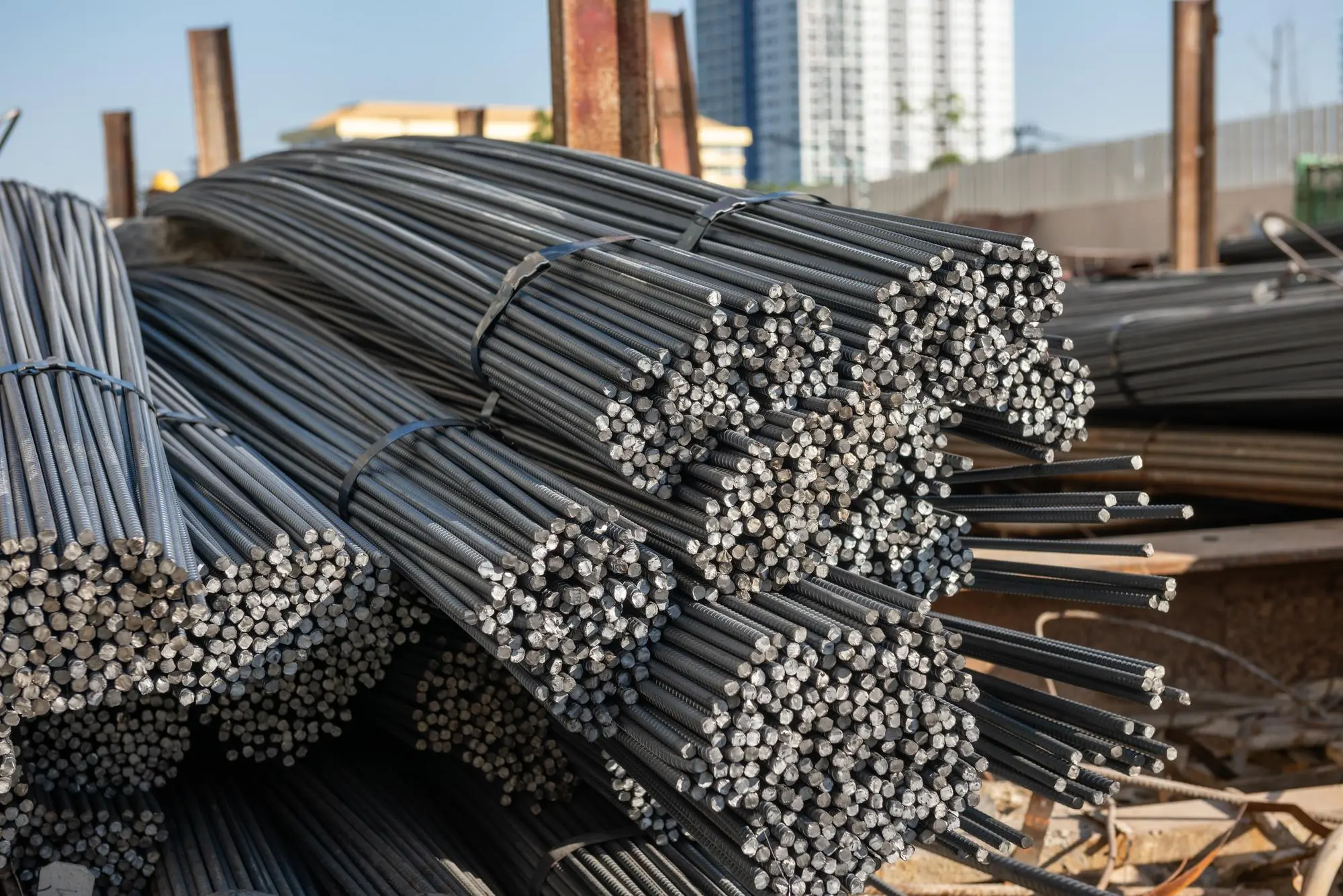
High-quality TMT Bars remain one of the most widely used reinforcement solutions across residential, commercial, industrial, and infrastructure construction.
Their combination of strength and ductility makes them suitable for a wide variety of structural applications.
However, projects located in more aggressive environments may require additional corrosion resistance depending on engineering specifications and exposure conditions.
This has contributed to growing interest in specialized reinforcement solutions.
Corrosion-resistant reinforcement is designed to provide additional protection against environmental conditions that may contribute to steel deterioration.
German Steel's CRS Green Steel is part of the company's broader portfolio of reinforcement solutions developed for the evolving requirements of modern construction.
Corrosion-resistant reinforcement may be considered for projects where durability, environmental exposure, and long-term structural performance are important material selection factors.
Another approach to corrosion protection involves creating a physical barrier between reinforcement steel and the surrounding environment.
Epoxy Coated TMT Bars use a protective epoxy coating designed to reduce direct exposure of the steel surface to corrosive agents.
Depending on project specifications, epoxy-coated reinforcement may be considered for applications such as:
The appropriate reinforcement solution should always be selected based on engineering requirements and project-specific conditions.
The initial cost of construction is only one component of a project's total lifecycle cost.
Infrastructure may remain operational for several decades.
Throughout this period, owners and operators may need to account for:
Material decisions made during construction can therefore influence costs long after the project is completed.
This is one reason lifecycle planning is becoming increasingly important across modern infrastructure development.
Material selection is only one part of effective reinforcement planning.
Accurate processing and installation are equally important.
Advanced Cut & Bend Solutions allow reinforcement to be processed according to approved Bar Bending Schedules before reaching the construction site.
Factory-processed reinforcement can support:
By combining appropriate material selection with precision processing, construction teams can develop a more integrated approach to reinforcement planning.
German Steel's product portfolio reflects the increasingly diverse requirements of India's construction and infrastructure sectors.
With manufacturing operations in Kutch and Samakhiyali, Gujarat, and its corporate headquarters in Ahmedabad, the company manufactures TMT Bars, CRS Green Steel, and Epoxy Coated TMT Bars, alongside advanced Cut & Bend Solutions.
This integrated product and processing portfolio enables German Steel to support varying construction requirements—from conventional reinforcement applications to projects where corrosion resistance, durability, and precision processing are important considerations.
Alongside manufacturing, German Steel continues to invest in renewable energy, Waste Heat Recovery Systems, responsible water management, and modern manufacturing infrastructure as part of its broader approach to operational efficiency and sustainable industrial growth.
India's next generation of infrastructure will be expected to support economic and social development for decades.
This makes durability an increasingly important consideration.
The conversation around reinforcement is gradually moving beyond immediate strength and availability towards broader questions:
How will the structure perform over time?
What environmental conditions will it face?
How can maintenance requirements be better managed?
Which reinforcement solution is appropriate for the project's exposure conditions?
These questions are becoming an important part of responsible infrastructure planning.
As India continues to invest in large-scale infrastructure, the importance of long-term structural durability will continue to grow.
Corrosion resistance plays an important role in this conversation, particularly for projects exposed to coastal, industrial, humid, or otherwise aggressive environmental conditions.
By considering exposure conditions early, selecting appropriate reinforcement solutions, and integrating precision processing into project planning, developers and engineers can take a more comprehensive approach to infrastructure durability.
Through its portfolio of TMT Bars, CRS Green Steel, Epoxy Coated TMT Bars, and advanced Cut & Bend Solutions, German Steel continues to support the evolving reinforcement requirements of India's infrastructure and construction sectors.
Corrosion can contribute to reinforcement deterioration, concrete cracking, spalling, increased maintenance requirements, and reduced structural durability. Considering corrosion resistance during project planning can support long-term infrastructure performance.
Coastal regions, marine environments, industrial zones, wastewater facilities, and structures exposed to high moisture, chlorides, or aggressive environmental conditions may require greater consideration of corrosion resistance.
Corrosion-resistant reinforcement bars are designed to provide improved protection against environmental conditions that may contribute to steel deterioration.
Epoxy-coated TMT bars have a protective epoxy layer designed to reduce direct contact between the reinforcement steel and corrosive agents.
The selection should be based on environmental exposure, engineering specifications, expected service life, structural requirements, and the project's broader durability strategy.
German Steel manufactures CRS Green Steel and Epoxy Coated TMT Bars alongside conventional TMT Bars and advanced Cut & Bend Solutions.
[ Where we share insights, updates, and stories that matter in the world of construction and beyond. ]
Learn how to store TMT bars correctly at construction sites in Gujarat. Explore practical TMT storage, handling and reinforcement management practices for contractors.

Learn how to select TMT bars for high-rise buildings based on strength, ductility, bendability, bonding, corrosion resistance and project requirements.

.jpg)


.webp)