

How to Store TMT Bars at Construction Sites in Gujarat: A Practical Guide
September 8, 2026
August 21, 2026
Modern construction is moving towards structures that are taller, larger, more complex and designed for demanding service conditions. High-rise buildings, commercial developments, industrial facilities and infrastructure projects all require reinforcement steel that can consistently meet the requirements of the structural design.
For these applications, choosing a TMT bar is not simply about selecting a particular grade.
The reinforcement needs to provide the right combination of strength, ductility, bendability, weldability and consistency, supported by dependable manufacturing processes.
This is where German TMT Bars are positioned for modern construction.
Manufactured by German Steel in Gujarat, German TMT combines Thermex-based manufacturing technology with a quality-focused production approach designed to deliver reinforcement for India's evolving construction requirements.
High-performance structures place greater importance on predictable material properties.
The reinforcement selected for such projects needs to work effectively as part of the reinforced concrete system and meet the requirements specified by the structural design.
Important considerations include:
No single characteristic defines a high-quality TMT bar.
Instead, it is the balance of properties and consistency of manufacturing that makes reinforcement suitable for demanding applications.
For a detailed look at these material characteristics, German Steel's existing article on Understanding Strength, Ductility and Weldability in Modern TMT Bars provides additional technical context.
Strength is one of the fundamental characteristics of reinforcement steel.
As buildings and infrastructure become more demanding, engineers need reinforcement that meets the mechanical requirements specified for the structure.
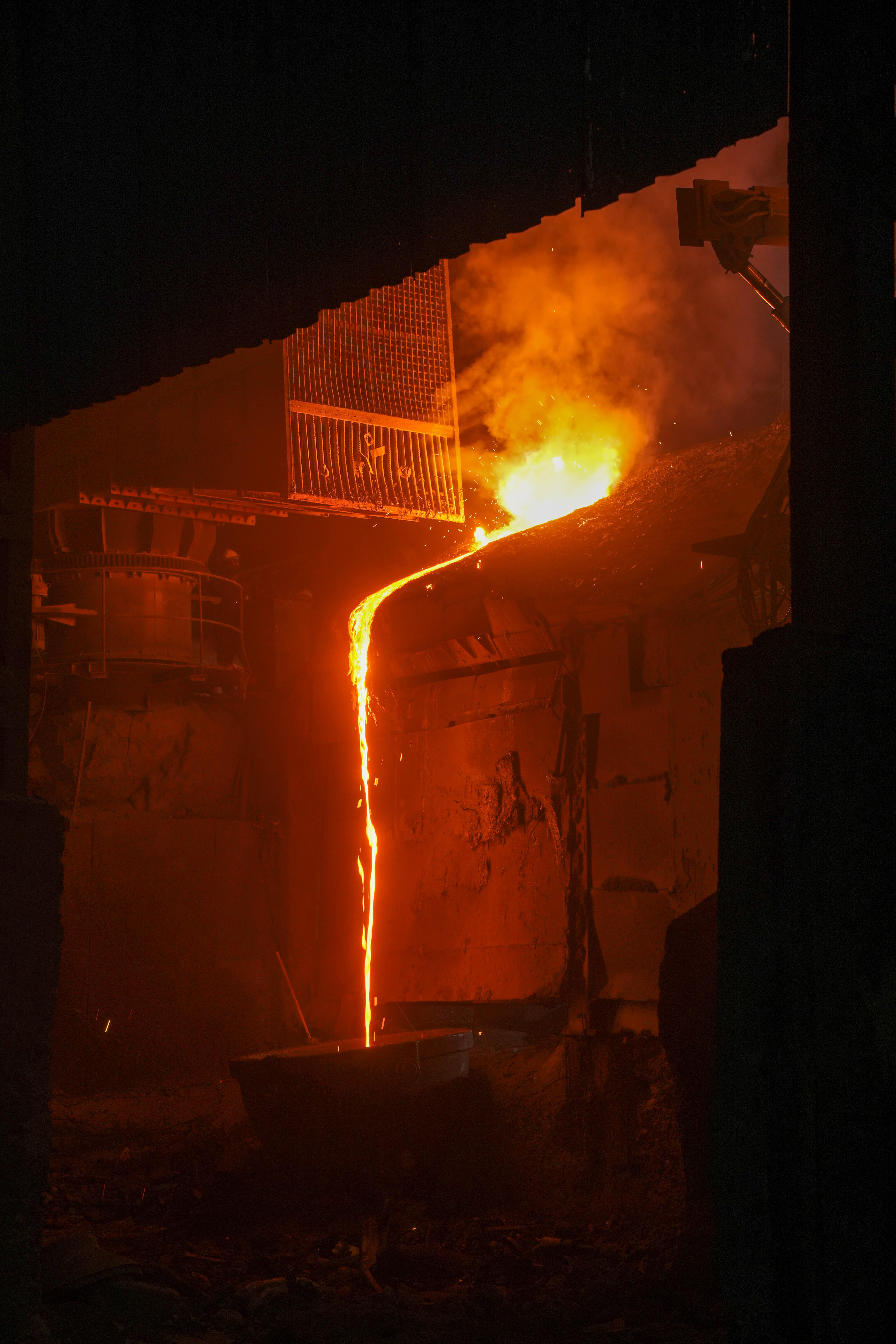
German TMT Bars are manufactured using Thermex Quenching Technology, a controlled process involving rapid cooling followed by self-tempering.
The technology is designed to develop the required combination of strength and ductility within the reinforcement.
This makes manufacturing technology an important part of the performance story—not simply the grade printed on the bar.
A high-strength reinforcement bar also needs appropriate ductility for the application in which it is specified.
Ductility allows steel to undergo deformation before failure and is an important consideration in structural engineering, particularly where structures need to accommodate demanding loading conditions.
German TMT's Thermex-based manufacturing process is designed to achieve a balance between strength and ductility.
The result is reinforcement engineered around more than a single mechanical property.
The performance expected from a TMT bar begins inside the manufacturing facility.
Controlled rolling, temperature management, cooling and subsequent quality processes all contribute to the characteristics of the finished reinforcement.
For large construction projects, consistency becomes particularly important.
A project may require substantial quantities of reinforcement across multiple deliveries. Maintaining consistent manufacturing characteristics helps provide greater predictability throughout the procurement and construction process.
German Steel's manufacturing operations in Gujarat form the foundation of its TMT production ecosystem.
German Steel uses Thermex Quenching Technology for its TMT Bars.
The controlled quenching and self-tempering process creates the metallurgical structure required to combine strength with ductility.
Rather than treating strength and ductility as competing objectives, the process is designed around achieving an appropriate balance between them.
For an in-depth explanation of the technology, readers can explore What Is Thermex Quenching Technology and Why Does It Matter?.
High-rise buildings place significant demands on structural design and reinforcement detailing.
The appropriate TMT grade, reinforcement quantity and detailing must always be determined by the structural design team.
Within that system, the reinforcement manufacturer becomes an important part of the material supply chain.
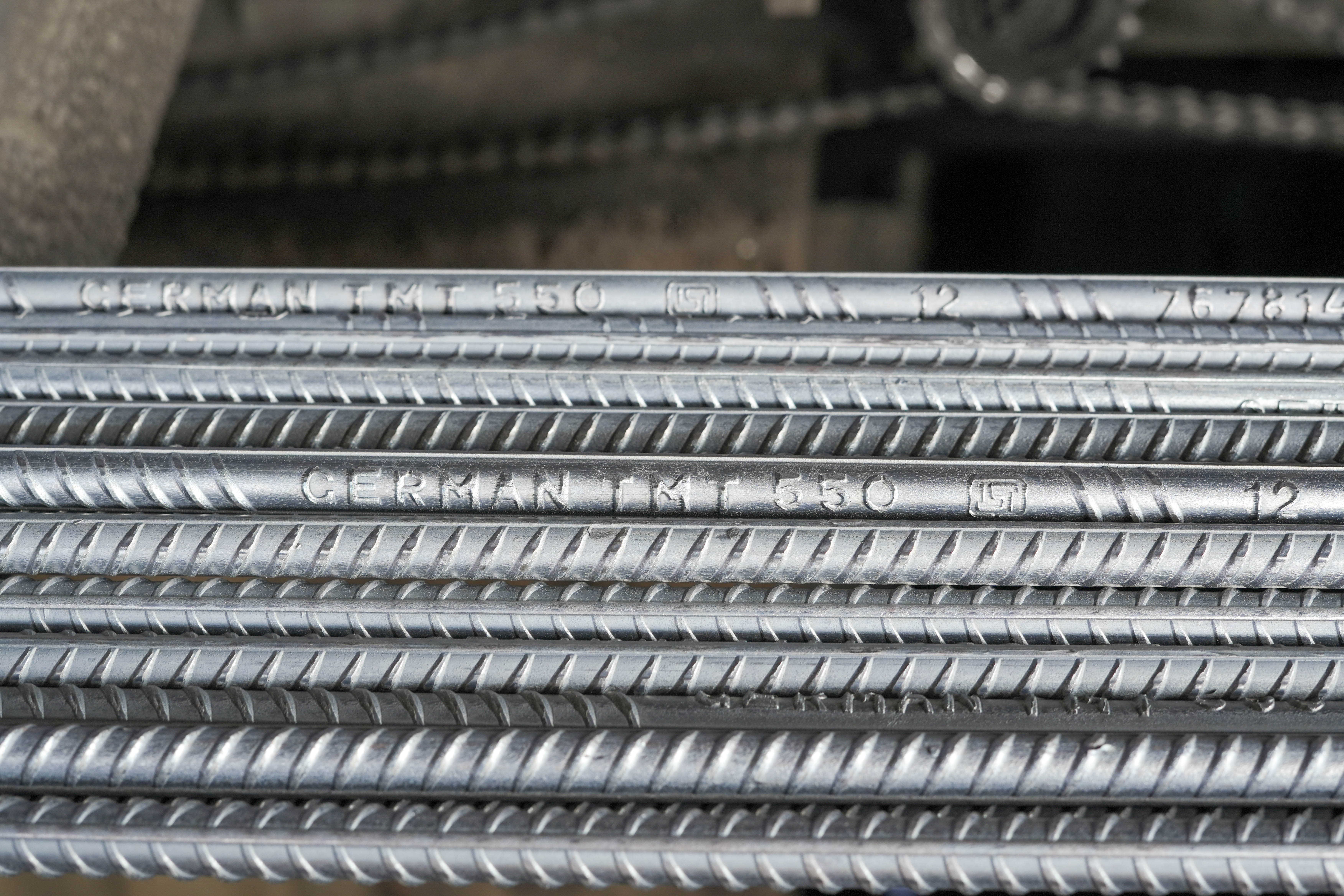
German TMT provides a reinforcement solution manufactured around the mechanical properties required for modern reinforced concrete construction.
Its focus on manufacturing technology and consistency makes it suitable for consideration across demanding building applications where the specified grade and product requirements are met.
Commercial buildings, institutional developments and industrial facilities can involve large structural spans, substantial loads and complex reinforcement requirements.
These projects also require coordinated procurement and delivery because reinforcement forms a significant part of the construction material schedule.
German Steel's product portfolio provides conventional TMT Bars alongside specialised reinforcement solutions.
Where additional corrosion protection is required, German Epoxy Coated TMT Bars provide an additional protective coating for suitable applications.
For reinforcement that needs to be prepared according to project-specific dimensions and shapes, German Cut & Bend Solutions provide factory-processed reinforcement.
India's infrastructure expansion is creating increasingly demanding requirements for steel reinforcement.
Roads, bridges, urban infrastructure, industrial projects, commercial developments and large public infrastructure all require steel that can be manufactured consistently at scale.
German Steel's Gujarat-based manufacturing ecosystem allows the company to participate in this growing construction landscape.
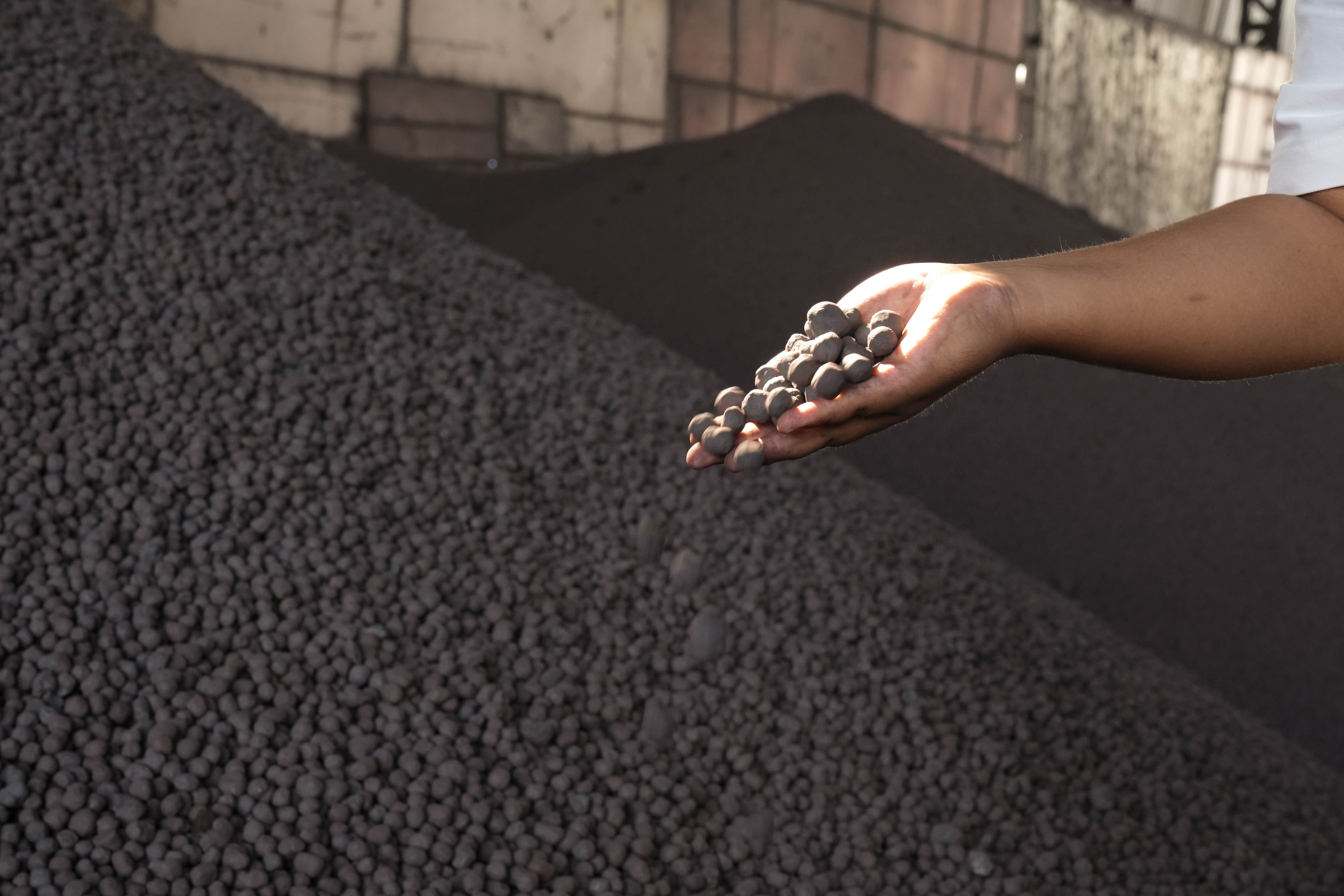
Its portfolio extends from TMT Bars to MS Billets and Sponge Iron, alongside specialised reinforcement products.
This broader manufacturing capability provides context for German Steel's position as a steel manufacturer rather than simply a finished-product supplier.
High-performance construction requires confidence in the material being incorporated into the structure.
That confidence comes from the combination of manufacturing technology, process control, testing and quality systems.
German Steel's manufacturing approach is supported by its quality-focused systems and applicable product standards.
For construction teams, this means TMT selection can be evaluated through a broader lens:
Technology → Manufacturing → Quality → Product → Project
The objective is to select reinforcement that matches the engineering requirements of the structure while coming from a manufacturing system capable of delivering consistent material.
High-performance construction is not only about the steel itself.
How reinforcement is prepared can also influence construction efficiency.
For projects with complex reinforcement schedules, factory processing can provide an alternative to performing all cutting and bending manually at the site.
German Steel's Cut & Bend Solutions allow reinforcement to be prepared according to project-specific requirements.
This can help construction teams organise reinforcement around the required bar shapes and dimensions before it reaches the installation stage.
Not every project requires the same reinforcement solution.
A conventional reinforced concrete structure may require standard TMT reinforcement.
A project exposed to challenging environmental conditions may require additional corrosion protection.
Another project may benefit from factory-processed reinforcement.
German Steel's portfolio addresses these different requirements through:
German TMT Bars for conventional reinforcement applications.
German Epoxy Coated TMT Bars for suitable projects where additional corrosion protection is specified.
German CRS Green Steel for applications where corrosion resistance and sustainability are important considerations.
German Cut & Bend for projects requiring processed reinforcement.
This allows project teams to select reinforcement according to the actual needs of the structure.
The German TMT proposition is built around more than a product specification.
It brings together:
For builders and project teams, this creates a more complete reinforcement solution.
The objective is not simply to manufacture steel that meets a specification.
It is to manufacture reinforcement that can become a dependable component of the structures India is building.
India's construction requirements are changing rapidly.
Buildings are becoming taller. Infrastructure projects are becoming larger. Industrial development is expanding. Developers and contractors are looking for materials that combine performance with consistency and dependable supply.
German Steel's approach to TMT manufacturing is designed around these requirements.
From its Gujarat manufacturing operations and Thermex-based technology to its wider portfolio of TMT Bars, Epoxy Coated TMT and Cut & Bend solutions, German Steel brings multiple reinforcement capabilities together under one manufacturing ecosystem.
For high-performance concrete structures, the right reinforcement is not simply about choosing steel with high strength.
It is about choosing steel engineered with the strength, ductility, consistency and manufacturing precision required by the project.
And that is where German TMT brings its advantage.
Consider the structural design requirements, required grade, strength, ductility, bendability, weldability, dimensional consistency, manufacturing quality and applicable standards.
Ductility allows reinforcement steel to deform before failure and is an important mechanical property alongside strength for structural applications.
German Steel manufactures its TMT Bars using Thermex Quenching Technology, involving controlled quenching and self-tempering.
German TMT can be considered for high-rise and other demanding reinforced concrete applications when the selected product grade and characteristics meet the project's structural specifications.
Yes. German Steel's portfolio includes TMT Bars, Epoxy Coated TMT Bars, CRS Green Steel and Cut & Bend Solutions.
German Steel has manufacturing operations in Gujarat, including its facilities at Samakhiyali and Viramgam. Its corporate office is in Ahmedabad.
[ Where we share insights, updates, and stories that matter in the world of construction and beyond. ]
Learn how to store TMT bars correctly at construction sites in Gujarat. Explore practical TMT storage, handling and reinforcement management practices for contractors.

Learn how to select TMT bars for high-rise buildings based on strength, ductility, bendability, bonding, corrosion resistance and project requirements.

.jpg)


.webp)