

How to Store TMT Bars at Construction Sites in Gujarat: A Practical Guide
September 8, 2026
July 16, 2026
As construction projects become larger, more complex, and increasingly time-sensitive, the demand for precision has never been greater. Developers and contractors are no longer looking only for quality reinforcement steel—they also expect reinforcement to arrive accurately processed, ready for installation, and aligned with project specifications.
This shift has accelerated the adoption of automated Cut & Bend technology across the construction industry.
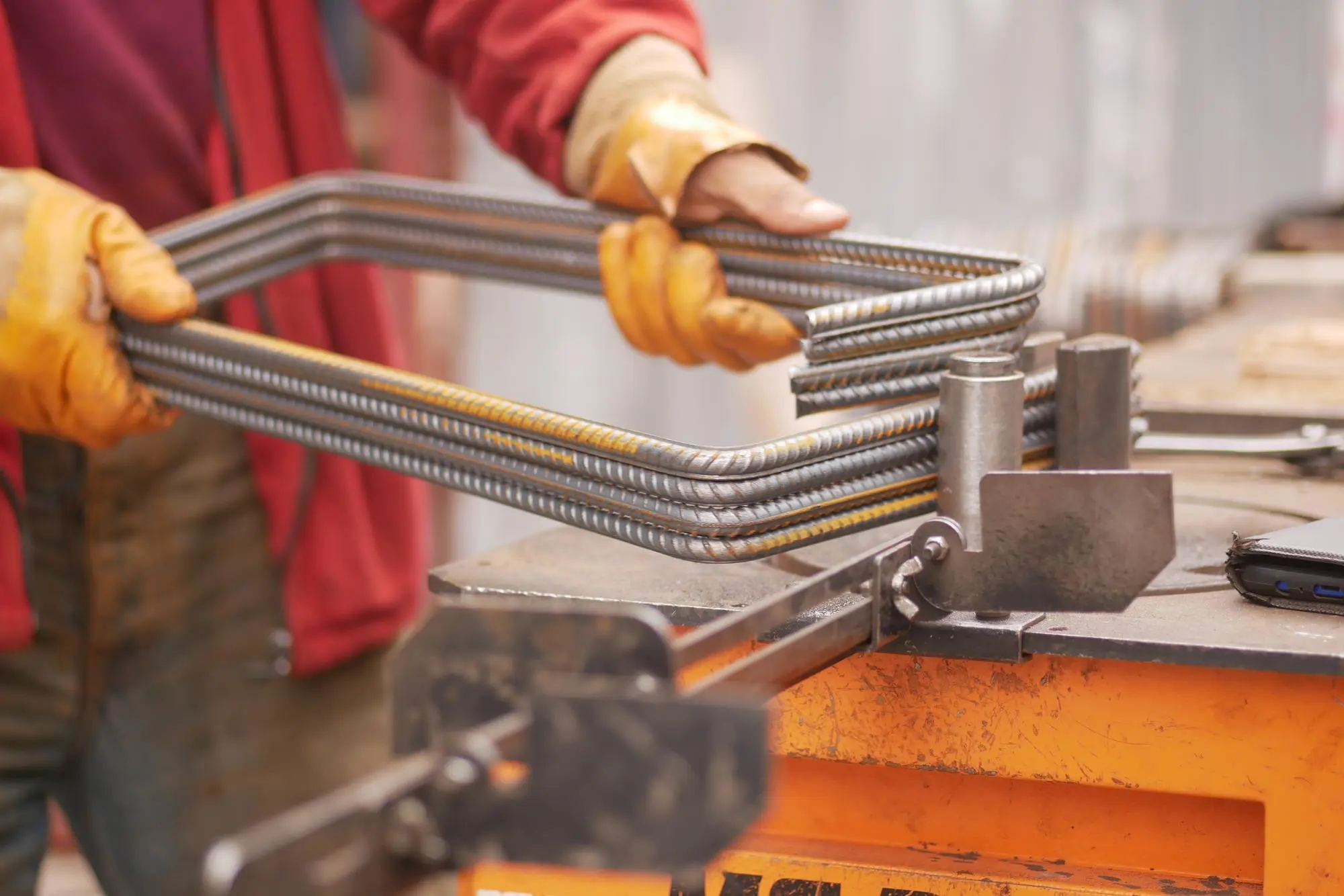
Modern Cut & Bend machines combine precision engineering, automation, and digital controls to process reinforcement with remarkable consistency. Instead of relying entirely on manual cutting and bending at construction sites, manufacturers can now deliver reinforcement that is processed according to approved engineering drawings and Bar Bending Schedules (BBS), helping projects improve efficiency from day one.
A Cut & Bend machine is an advanced reinforcement processing system that cuts and bends steel bars to predefined lengths, shapes, and angles based on engineering requirements.
Rather than processing reinforcement manually on-site, automated systems prepare reinforcement before dispatch, ensuring that every bar matches the required specifications.
These machines are widely used for:
Traditional reinforcement processing depends heavily on manual measurements and site conditions.
While experienced workers play an important role, manual processing can introduce challenges such as:
As project timelines become tighter, these inefficiencies can have a noticeable impact on productivity.
Modern Cut & Bend machines are designed to deliver consistent results across large production volumes.
Using programmable controls, automated feeding systems, and precision bending mechanisms, these machines help ensure that reinforcement is processed according to approved project specifications.
Automation helps improve:
For large infrastructure projects requiring thousands of reinforcement bars, even small improvements in accuracy can contribute to smoother project execution.
Automation works most effectively when paired with detailed engineering documentation.
Modern Cut & Bend facilities process reinforcement according to approved Bar Bending Schedules (BBS), which specify:
By following these schedules, manufacturers can prepare reinforcement before it reaches the construction site, reducing the need for manual adjustments during installation.
One of the key advantages of automated reinforcement processing is better material optimization.
Accurate cutting and planned sequencing can help reduce unnecessary offcuts and improve steel utilization.
Potential benefits include:
For large projects, these efficiencies can contribute to better resource management throughout the construction lifecycle.
Construction productivity is influenced long before concrete is poured.
When reinforcement arrives pre-cut and pre-bent according to project requirements, installation teams can focus on placement rather than processing.
Factory-processed reinforcement can help support:
As projects continue to increase in scale, this approach is becoming increasingly common across commercial and infrastructure developments.
One of automation's greatest advantages is repeatability.
Unlike manual processing, automated systems can consistently reproduce the same dimensions and bending profiles across large production batches.
This consistency supports:
For developers and contractors, consistency often translates into greater confidence throughout project execution.
Automation is continuing to evolve.
Modern reinforcement facilities are increasingly integrating technologies such as:
These advancements are helping improve both productivity and operational visibility while supporting increasingly demanding construction projects.
As the construction industry moves towards greater precision and efficiency, German Steel has invested in advanced reinforcement processing to support modern project requirements.
Operating from its manufacturing facilities in Kutch and Samakhiyali, Gujarat, the company offers Cut & Bend Solutions designed to deliver reinforcement processed according to approved project specifications.
Alongside its reinforcement processing capabilities, German Steel manufactures TMT Bars, CRS Green Steel, and Epoxy Coated TMT Bars, supporting infrastructure, industrial, commercial, and residential projects across India.
Combined with investments in renewable energy, Waste Heat Recovery Systems, responsible water management, and modern manufacturing infrastructure, German Steel continues to strengthen its integrated approach to manufacturing and value-added reinforcement solutions.
Automation is changing the way reinforcement is prepared for modern construction.
By improving precision, consistency, material utilization, and production efficiency, automated Cut & Bend technology is helping manufacturers and construction teams deliver projects with greater confidence and accuracy.
As India's infrastructure sector continues to grow, factory-processed reinforcement is expected to play an increasingly important role in supporting faster, safer, and more efficient construction.
A Cut & Bend machine is an automated system that cuts and bends reinforcement steel bars according to engineering drawings and Bar Bending Schedules.
Automation reduces manual measurement variations by using programmable controls and precision processing systems, helping achieve consistent cutting and bending.
By processing reinforcement according to planned dimensions and optimizing cutting sequences, Cut & Bend facilities can improve material utilization and reduce unnecessary offcuts.
High-rise buildings, bridges, industrial facilities, warehouses, infrastructure projects, commercial developments, and residential construction commonly benefit from factory-processed reinforcement.
German Steel manufactures TMT Bars, CRS Green Steel, Epoxy Coated TMT Bars, and provides advanced Cut & Bend Solutions for modern construction and infrastructure projects.
[ Where we share insights, updates, and stories that matter in the world of construction and beyond. ]
Learn how to store TMT bars correctly at construction sites in Gujarat. Explore practical TMT storage, handling and reinforcement management practices for contractors.

Learn how to select TMT bars for high-rise buildings based on strength, ductility, bendability, bonding, corrosion resistance and project requirements.

.jpg)


.webp)