

How to Store TMT Bars at Construction Sites in Gujarat: A Practical Guide
September 8, 2026
July 7, 2026
India’s steel industry is entering an important phase of expansion as infrastructure development, urbanization, manufacturing growth, and construction activity continue to increase the country’s demand for steel.
Under the National Steel Policy 2017, India has set a target of reaching 300 million tonnes of crude steel production capacity by 2030–31.
Achieving this target will require significant investment in manufacturing capacity, advanced technology, raw material security, energy efficiency, skilled manpower, and sustainable production practices.
For India’s steel manufacturers, the next few years represent an opportunity to strengthen domestic manufacturing capabilities while supporting the country’s rapidly expanding infrastructure and industrial requirements.
Steel remains one of the most important materials supporting economic and infrastructure development.
Highways, bridges, railways, airports, industrial facilities, commercial developments, residential projects, energy infrastructure, and urban development all require significant quantities of steel.
As India continues investing in these sectors, domestic steel demand is expected to remain strong.
According to the World Steel Association’s April 2026 Short Range Outlook, India’s steel demand is projected to grow by 7.4% in 2026 and 9.2% in 2027, maintaining its position as the fastest-growing major steel-consuming economy.
Expanding domestic steel manufacturing capacity will therefore be critical to supporting the country’s long-term development.
The National Steel Policy outlines India’s ambition to develop a globally competitive steel industry capable of supporting domestic requirements and strengthening the country’s position in international markets.
One of the major objectives of the policy is to achieve 300 million tonnes of crude steelmaking capacity by 2030–31.
The policy also focuses on improving per capita steel consumption, increasing domestic production, strengthening raw material availability, encouraging technological advancement, and improving energy efficiency across the industry.
Reaching this target will require both the expansion of existing manufacturing facilities and continued investment in modern steel production infrastructure.
India’s infrastructure development plans are closely connected to the future growth of the steel industry.
Large-scale investments across highways, railways, urban infrastructure, renewable energy, industrial corridors, logistics networks, housing, and commercial development continue to increase requirements for construction materials.
Reinforcement steel plays an important role across many of these projects.
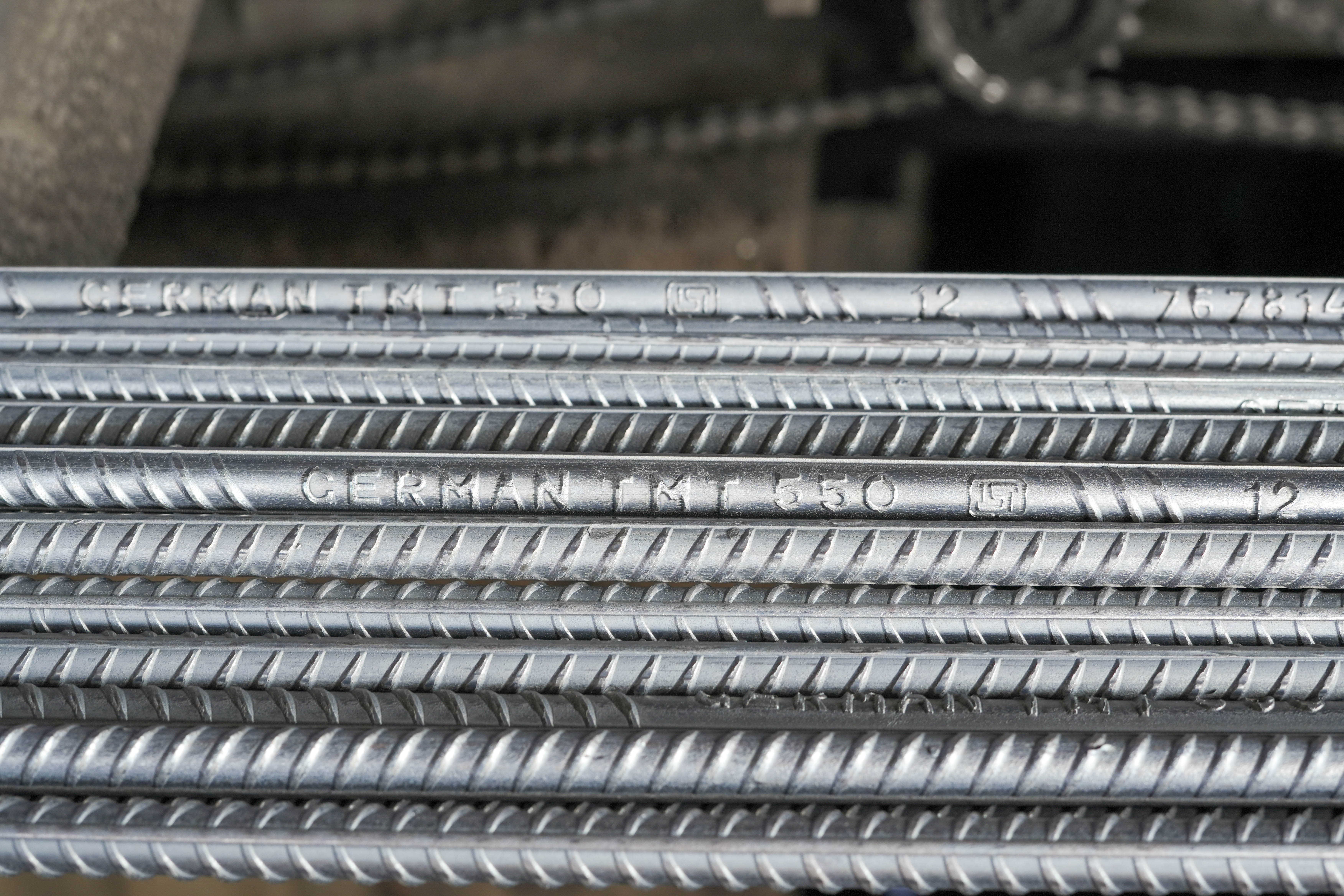
Products such as German TMT Bars, CRS Green Steel, Epoxy Coated TMT Bars, and advanced Cut & Bend solutions can support different infrastructure and construction requirements.
As projects increase in size and technical complexity, manufacturers will need to provide reinforcement solutions that combine quality, consistency, durability, precision, and efficient project execution.
India’s ambitious capacity target highlights the importance of developing a strong domestic manufacturing ecosystem.
Increasing domestic steel production can support infrastructure development, strengthen supply chains, create employment opportunities, encourage technological advancement, and improve the availability of steel for construction and industrial projects.
Vertically integrated steel manufacturers can contribute to this growth by maintaining greater control across production processes.
German Steel operates as a vertically integrated steel manufacturer with manufacturing operations in Gujarat and serves infrastructure, industrial, commercial, and institutional projects across India.
The company continues to invest in modern manufacturing capabilities, automation, advanced reinforcement processing, and sustainable production practices.
Expanding steel production capacity is not simply about constructing larger manufacturing facilities.
Modern steel plants require advanced technologies that can improve production efficiency, product consistency, quality control, resource utilization, and operational reliability.
Automation will become increasingly important as manufacturers work towards producing larger quantities of steel while maintaining consistent standards.
Advanced production systems can help manufacturers monitor processes more effectively, reduce unnecessary wastage, improve dimensional accuracy, and optimize manufacturing operations.
German Steel’s continued investments in manufacturing technology and automated Cut & Bend capabilities reflect the growing importance of technology across the steel and construction industries.
The expansion of steel manufacturing capacity also presents an important environmental challenge.
Steel production is energy and resource intensive. As production increases, manufacturers will need to focus increasingly on energy efficiency, renewable power, responsible water management, waste reduction, and improved resource utilization.
The future growth of the Indian steel industry will therefore depend on the ability to balance manufacturing expansion with environmental responsibility.
At German Steel, sustainability initiatives include renewable energy generation through wind and solar power, Waste Heat Recovery Systems, responsible water management, energy-efficient production practices, and continuous resource optimization.
These initiatives contribute towards developing a manufacturing ecosystem capable of supporting industrial growth more responsibly.
As India expands its steel manufacturing capabilities, the transition towards more environmentally responsible steel production will become increasingly important.
Green steel initiatives focus on improving energy efficiency, reducing environmental impact, optimizing resources, and introducing cleaner technologies across manufacturing processes.
German Steel’s CRS Green Steel reflects the company’s broader commitment to developing reinforcement solutions aligned with the changing requirements of construction and sustainable development.
The growth of green steel manufacturing can help India strengthen its industrial capabilities while progressing towards broader sustainability objectives.
India’s steel capacity expansion will take place alongside continued growth in infrastructure and construction activity.
This means that improving manufacturing capacity alone will not be enough.
The construction industry will also require solutions that help projects use steel more efficiently.
Advanced Cut & Bend technology enables reinforcement steel to be processed according to project-specific Bar Bending Schedules before reaching construction sites.
This can improve dimensional accuracy, optimize material utilization, reduce unnecessary on-site processing, and support more efficient project execution.
As construction projects become larger and more complex, such value-added steel solutions are likely to play an increasingly important role.
Achieving the 300 million tonnes capacity target will require the steel industry to address several challenges.
These include securing raw materials, improving energy efficiency, investing in manufacturing infrastructure, adopting advanced technology, developing skilled manpower, strengthening logistics, and reducing the environmental impact of increased production.
The industry will also need to continuously improve quality standards and manufacturing efficiency to remain globally competitive.
Addressing these challenges will require collaboration between steel manufacturers, technology providers, infrastructure developers, policymakers, and other industry stakeholders.
For steel manufacturers, India’s 2030 capacity target represents both significant opportunity and growing responsibility.
Manufacturers will need to invest continuously in technology, manufacturing infrastructure, product development, automation, quality management, and sustainable production.
Companies capable of combining manufacturing scale with operational efficiency and responsible resource utilization will be better positioned to support India’s future infrastructure requirements.
India’s target of achieving 300 million tonnes of steel production capacity by 2030–31 reflects the scale of the country’s infrastructure and industrial ambitions.
Meeting this target will require continued investment across the entire steel manufacturing ecosystem.
Through modern manufacturing infrastructure, advanced reinforcement solutions, automation, renewable energy, waste heat recovery, responsible water management, and continuous resource optimization, German Steel remains committed to supporting India’s growing infrastructure and construction sectors.
As the Indian steel industry moves towards its next phase of growth, German Steel continues to focus on building stronger reinforcement solutions, improving manufacturing efficiency, and contributing towards a more sustainable industrial future.
Under the National Steel Policy 2017, India aims to achieve 300 million tonnes of crude steel production capacity by 2030–31.
Growing infrastructure development, urbanization, construction activity, industrial expansion, and manufacturing growth are increasing the country’s demand for steel.
According to the World Steel Association’s April 2026 Short Range Outlook, India’s steel demand is projected to grow by 7.4% in 2026 and 9.2% in 2027.
Major challenges include raw material security, energy requirements, manufacturing investment, technology adoption, skilled manpower, logistics, and environmental sustainability.
German Steel supports infrastructure and construction projects through German TMT Bars, CRS Green Steel, Epoxy Coated TMT Bars, advanced Cut & Bend solutions, modern manufacturing technology, and sustainable production practices.
[ Where we share insights, updates, and stories that matter in the world of construction and beyond. ]
Learn how to store TMT bars correctly at construction sites in Gujarat. Explore practical TMT storage, handling and reinforcement management practices for contractors.

Learn how to select TMT bars for high-rise buildings based on strength, ductility, bendability, bonding, corrosion resistance and project requirements.

.jpg)


.webp)