

How to Store TMT Bars at Construction Sites in Gujarat: A Practical Guide
September 8, 2026
July 16, 2026
Steel manufacturing operates around the clock, with production depending on the seamless performance of complex machinery. From reheating furnaces and rolling mills to cooling beds, shearing systems, and reinforcement processing equipment, every machine plays a critical role in maintaining productivity.
An unexpected equipment failure can bring an entire production line to a halt, affecting production schedules, delivery commitments, and operational efficiency.
To reduce these risks, manufacturers around the world are increasingly adopting predictive maintenance—a data-driven approach that helps identify potential equipment issues before they lead to costly breakdowns.
As Artificial Intelligence (AI), Industrial Internet of Things (IIoT), and sensor technologies continue to evolve, predictive maintenance is becoming an important part of the future of steel manufacturing.
Predictive maintenance is a maintenance strategy that uses real-time equipment data, sensors, and advanced analytics to assess the condition of machines.
Instead of servicing equipment only after it fails—or following a fixed maintenance schedule—manufacturers monitor machine performance continuously and plan maintenance based on actual operating conditions.
This approach helps maintenance teams identify potential issues before they become major failures.
Steel plants rely on continuous production.
If one critical machine stops unexpectedly, it can interrupt multiple downstream processes.
Unplanned downtime can result in:
Reducing unexpected downtime has therefore become a key operational objective for manufacturers worldwide.
Artificial Intelligence can analyse thousands of operational data points every second, identifying patterns that may indicate early signs of equipment wear or abnormal behaviour.
Rather than waiting for visible failures, AI models can help detect subtle changes that might otherwise go unnoticed.
Potential AI-supported applications include:
These insights help maintenance teams make more informed decisions about equipment servicing.
Modern steel plants increasingly use Industrial Internet of Things (IIoT) devices to collect data from machinery.
Sensors can continuously monitor:
The collected information is transmitted to monitoring systems, where it can be analysed for unusual operating conditions.
Predictive maintenance can be applied across several types of equipment commonly found in steel manufacturing, including:
By monitoring these critical assets, manufacturers can improve equipment availability and reduce the likelihood of unexpected shutdowns.
Predictive maintenance is not only about preventing breakdowns.
It can also help manufacturers:
These improvements contribute to smoother plant operations and more predictable production.
It's important to understand that AI does not replace experienced maintenance engineers.
Instead, AI provides additional insights based on equipment data, allowing maintenance teams to prioritise inspections and interventions more effectively.
The combination of engineering expertise and data-driven analysis is shaping the next generation of industrial maintenance.
At German Steel, operational reliability is supported through continuous investment in modern manufacturing infrastructure and disciplined production practices.
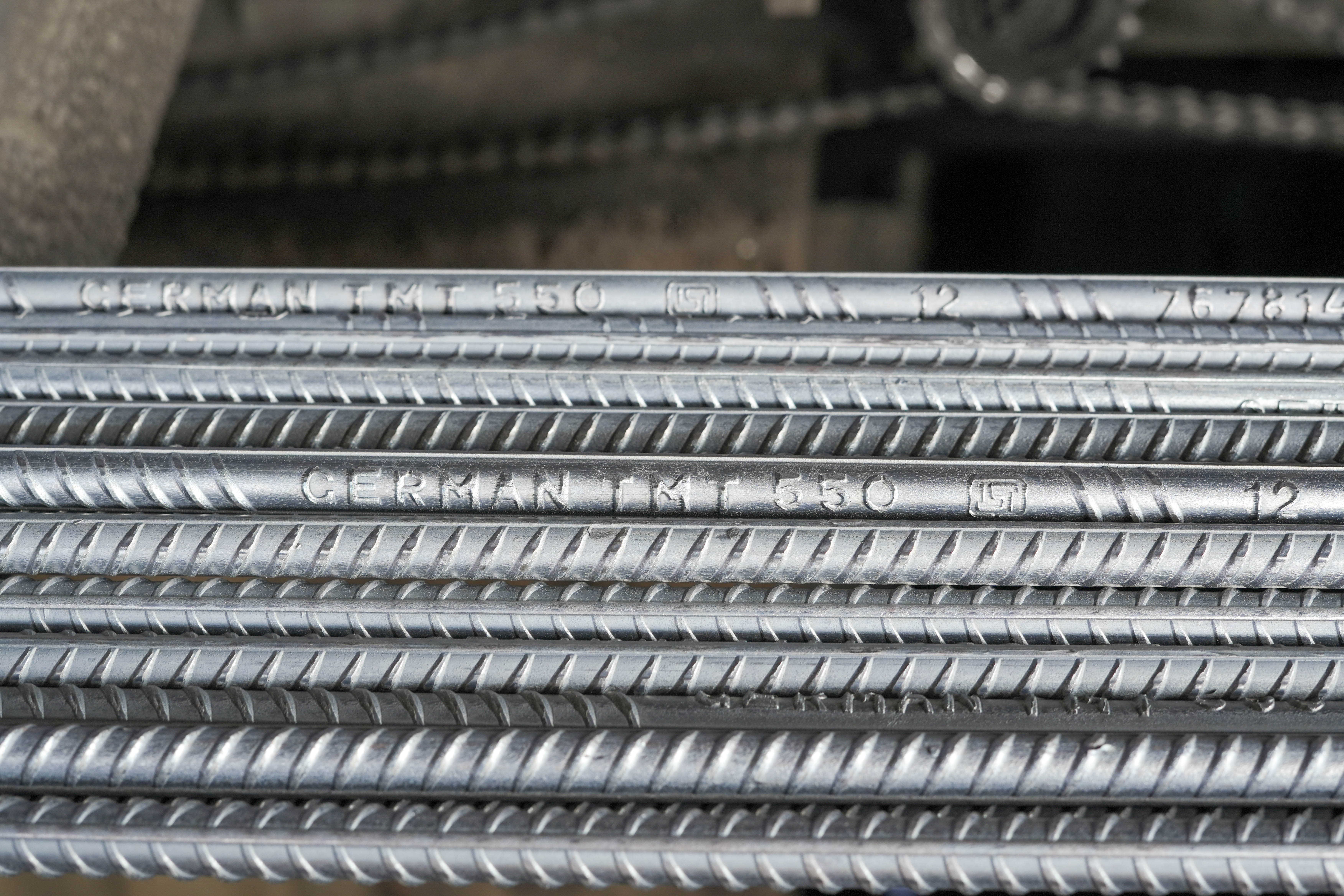
Operating from manufacturing facilities in Kutch and Samakhiyali, Gujarat, the company manufactures TMT Bars, CRS Green Steel, Epoxy Coated TMT Bars, and advanced Cut & Bend Solutions for infrastructure, commercial, industrial, and residential projects.
Alongside its manufacturing capabilities, German Steel continues to strengthen its operations through responsible resource management, renewable energy initiatives, Waste Heat Recovery Systems, and a focus on continuous improvement—reflecting the broader modernization taking place across the global steel industry.
As steel manufacturing becomes increasingly connected and data-driven, predictive maintenance is expected to play an even greater role in improving operational performance.
The combination of AI, sensors, Industrial IoT, and engineering expertise offers manufacturers new opportunities to reduce downtime, improve equipment reliability, and support more efficient production.
For an industry where consistency and reliability are essential, predictive maintenance represents another step towards smarter and more resilient manufacturing.
Predictive maintenance uses equipment data, sensors, and analytics to identify potential machine issues before they result in equipment failure.
AI analyses equipment data such as vibration, temperature, and operational trends to help identify abnormal patterns that may indicate developing faults.
Rolling mills, reheating furnaces, motors, gearboxes, conveyor systems, hydraulic equipment, cooling beds, shearing machines, and reinforcement processing equipment can all benefit from predictive maintenance strategies.
No. It complements preventive and corrective maintenance by helping maintenance teams make more informed decisions based on real-time equipment conditions.
German Steel manufactures TMT Bars, CRS Green Steel, Epoxy Coated TMT Bars, and Cut & Bend Solutions while continuously investing in modern manufacturing infrastructure, sustainable operations, and operational excellence.
[ Where we share insights, updates, and stories that matter in the world of construction and beyond. ]
Learn how to store TMT bars correctly at construction sites in Gujarat. Explore practical TMT storage, handling and reinforcement management practices for contractors.

Learn how to select TMT bars for high-rise buildings based on strength, ductility, bendability, bonding, corrosion resistance and project requirements.


.jpg)


.webp)