

How to Store TMT Bars at Construction Sites in Gujarat: A Practical Guide
September 8, 2026
July 16, 2026
For decades, quality control in steel manufacturing has relied on a combination of experienced engineers, laboratory testing, visual inspections, and rigorous quality assurance procedures. These methods continue to play a vital role in ensuring that steel products meet the mechanical and dimensional requirements expected by construction, infrastructure, and industrial projects.
Today, however, the industry is entering a new phase.
Artificial Intelligence (AI), computer vision, machine learning, and advanced imaging technologies are beginning to complement traditional quality control methods, helping manufacturers identify defects faster, improve consistency, and make more informed production decisions.
While AI is not replacing engineers or laboratory testing, it is becoming an increasingly valuable tool in the pursuit of smarter and more efficient manufacturing.
Every piece of reinforcement steel used in a structure contributes to its long-term strength, safety, and durability.
Whether the application is a residential building, bridge, metro project, industrial facility, or commercial development, engineers rely on steel that meets specified quality requirements.
This is why manufacturers invest heavily in quality control throughout the production process—not just at the final inspection stage.
Products such as TMT Bars, CRS Green Steel, and Epoxy Coated TMT Bars all require consistent manufacturing practices and quality verification before reaching customers.
Conventional quality inspection continues to form the backbone of steel manufacturing.
Typical inspection processes include:
These inspections are performed by trained personnel using calibrated equipment and standardized testing procedures.
They remain essential because many mechanical properties can only be verified through physical testing.
Artificial Intelligence is enhancing—not replacing—traditional inspection methods.
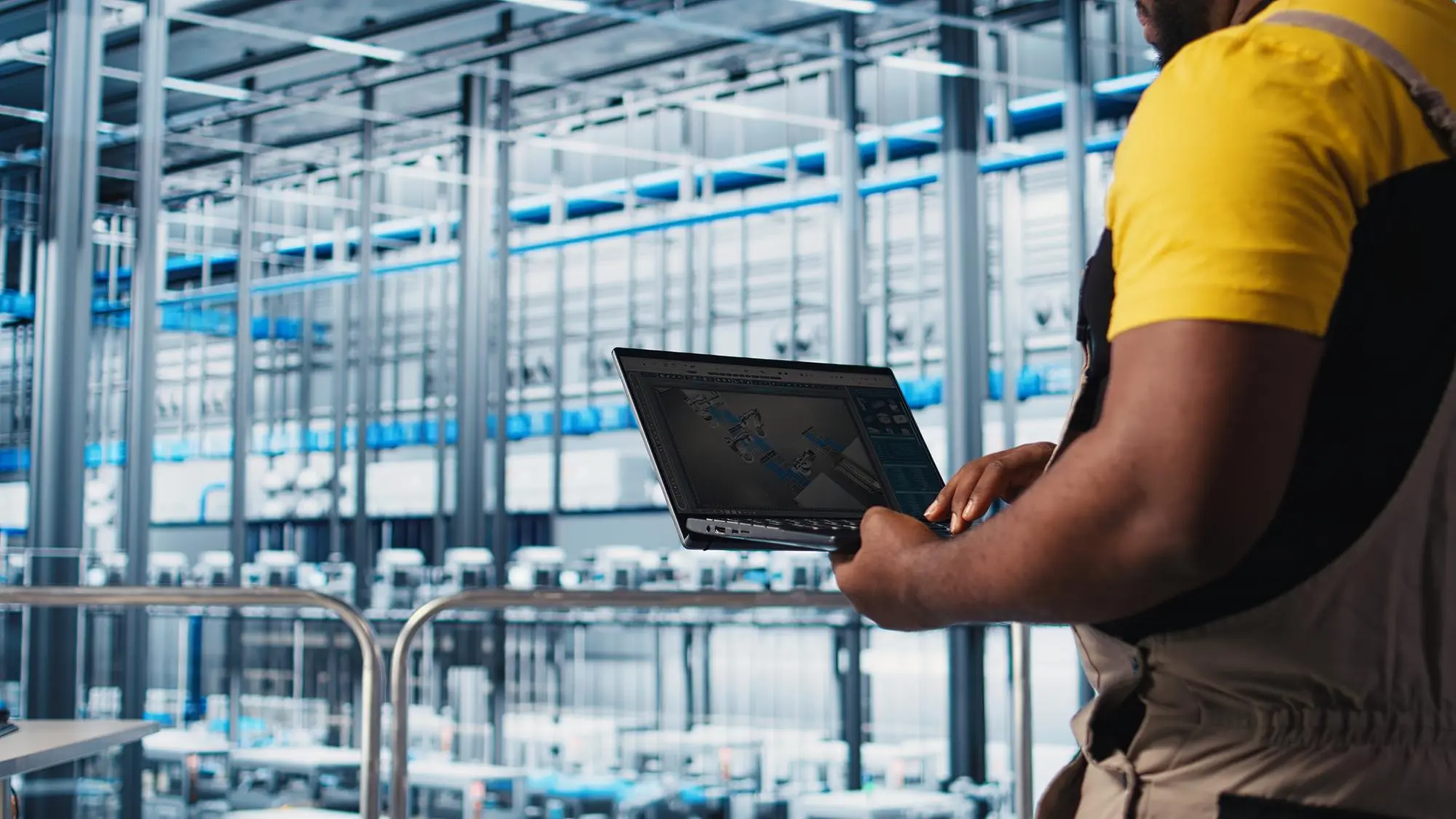
Modern AI systems can process thousands of images, measurements, and production data points in real time, helping manufacturers detect patterns that may not always be visible through manual observation alone.
Some of the most promising applications include:
These technologies enable manufacturers to react more quickly when production variations occur.
One of the fastest-growing applications of AI in manufacturing is computer vision.
High-resolution industrial cameras continuously capture images of steel products as they move through production lines.
AI algorithms can then analyse these images to identify:
Instead of depending solely on periodic manual inspections, computer vision systems can inspect every product passing through the line.
Traditional inspections often occur at specific intervals.
AI-powered inspection systems can monitor production continuously, allowing potential issues to be identified much earlier.
Early detection may help manufacturers:
The faster a production issue is identified, the easier it becomes to correct.
One advantage of machine learning is its ability to analyse historical manufacturing information.
By comparing thousands—or even millions—of production records, AI models can recognise trends that may influence quality outcomes.
For example, systems may identify relationships between:
These insights can support engineers in making better-informed production decisions.
Despite rapid advances in AI, steel manufacturing remains a highly engineered process.
Experienced metallurgists, quality engineers, production specialists, and laboratory teams continue to play an essential role in:
AI should be viewed as a decision-support tool rather than a replacement for technical expertise.
The future of quality control is likely to combine advanced technologies with experienced human judgement.
As steel plants continue adopting Industry 4.0 technologies, quality control is expected to become increasingly data-driven.
Future manufacturing facilities may combine:
Together, these technologies have the potential to improve quality consistency while supporting greater operational efficiency.
At German Steel, quality remains central to every stage of manufacturing.
Operating from manufacturing facilities in Kutch and Samakhiyali, Gujarat, the company follows structured manufacturing and quality assurance processes while producing TMT Bars, CRS Green Steel, Epoxy Coated TMT Bars, and delivering precision Cut & Bend Solutions.
As the steel industry continues to evolve, German Steel remains committed to continuous improvement, modern manufacturing infrastructure, sustainable operations, and delivering reinforcement solutions that meet the evolving needs of India's construction and infrastructure sectors.
Artificial Intelligence is opening new possibilities for quality control across the steel industry.
While traditional testing methods remain indispensable, technologies such as computer vision, machine learning, and real-time analytics are helping manufacturers explore new ways to improve consistency, detect defects earlier, and optimise production processes.
The future of steel manufacturing is unlikely to be defined by AI alone—but by the combination of advanced technology, engineering expertise, and a continued commitment to quality.
No. AI is designed to complement traditional inspection methods by analysing images and production data more quickly, while physical testing and engineering expertise remain essential.
Computer vision uses industrial cameras and AI algorithms to inspect steel products for surface defects, dimensional irregularities, and other visual imperfections during production.
AI can help identify production trends, detect defects earlier, support process optimisation, and provide real-time insights that assist quality and production teams.
Many steel manufacturers around the world are exploring or implementing AI in areas such as quality inspection, predictive maintenance, energy management, and process optimisation. Adoption varies between companies and facilities.
German Steel manufactures TMT Bars, CRS Green Steel, Epoxy Coated TMT Bars, and offers Cut & Bend Solutions for residential, commercial, industrial, and infrastructure projects.
[ Where we share insights, updates, and stories that matter in the world of construction and beyond. ]
Learn how to store TMT bars correctly at construction sites in Gujarat. Explore practical TMT storage, handling and reinforcement management practices for contractors.

Learn how to select TMT bars for high-rise buildings based on strength, ductility, bendability, bonding, corrosion resistance and project requirements.

.jpg)


.webp)