

How to Store TMT Bars at Construction Sites in Gujarat: A Practical Guide
September 8, 2026
September 8, 2026
As buildings become taller and structural designs become more sophisticated, reinforcement steel plays an increasingly important role in construction performance.
High-rise buildings place different demands on reinforced concrete structures compared with conventional low-rise construction. Columns, beams, shear walls, foundations and other structural elements must work together to transfer substantial loads while maintaining the required strength, ductility and durability.
This makes the selection of TMT bars an important engineering decision.
The right reinforcement is not necessarily the bar with the highest strength grade or the lowest purchase price. Engineers and project teams need to consider the complete combination of mechanical properties, manufacturing quality, processing requirements and environmental conditions.
For high-rise construction, German TMT provides a range of reinforcement solutions designed around the performance requirements of modern RCC structures.
High-rise structures typically involve significant vertical loads as well as lateral forces generated by wind and seismic activity.
The reinforcement embedded within concrete contributes to the structural system's ability to resist these forces.
Depending on the structural design, reinforcement may be required in:
Each application can have different reinforcement requirements.
Therefore, TMT selection should begin with the structural engineer's design and specified grade rather than simply choosing a product based on its nominal strength.
High-rise construction naturally creates interest in high-strength reinforcement.
Higher-strength TMT grades can provide greater yield strength, which can be useful in structural designs where reinforcement demand is high.
However, structural reinforcement performance is not determined by yield strength alone.
Engineers also consider properties such as:
This balance is particularly important in high-rise structures where reinforcement must perform as part of a complete RCC system.
German Steel's range of TMT Bars is designed to serve different reinforcement requirements and grades used in modern construction.
Ductility refers to the ability of steel to undergo deformation before fracture.
This characteristic becomes especially important when a structure experiences dynamic or lateral loading.
During an earthquake, for example, structural components can experience repeated loading and deformation. Ductile reinforcement can absorb and dissipate energy through controlled deformation rather than failing suddenly.
This is one reason engineers consider the combination of strength and ductility when specifying reinforcement for demanding structures.
German TMT uses controlled thermo-mechanical processing to develop the required balance of strength and ductility in its reinforcement products.
For a deeper understanding, see the guide on strength, ductility and weldability in modern TMT bars.
High-rise reinforcement is rarely used only in straight lengths.
Bars need to be fabricated into a wide variety of shapes for columns, beams, slabs, walls, foundations and reinforcement cages.
This makes bendability an important consideration.
A TMT bar with suitable bendability can be fabricated according to reinforcement drawings while maintaining the required structural characteristics.
This becomes particularly valuable when projects use large quantities of reinforcement and detailed bar-bending schedules.
German Steel's Cut and Bend solutions can support projects where reinforcement is prepared according to specified dimensions and shapes before reaching the construction site.
TMT bars do not work independently.
Their performance depends on their interaction with surrounding concrete.
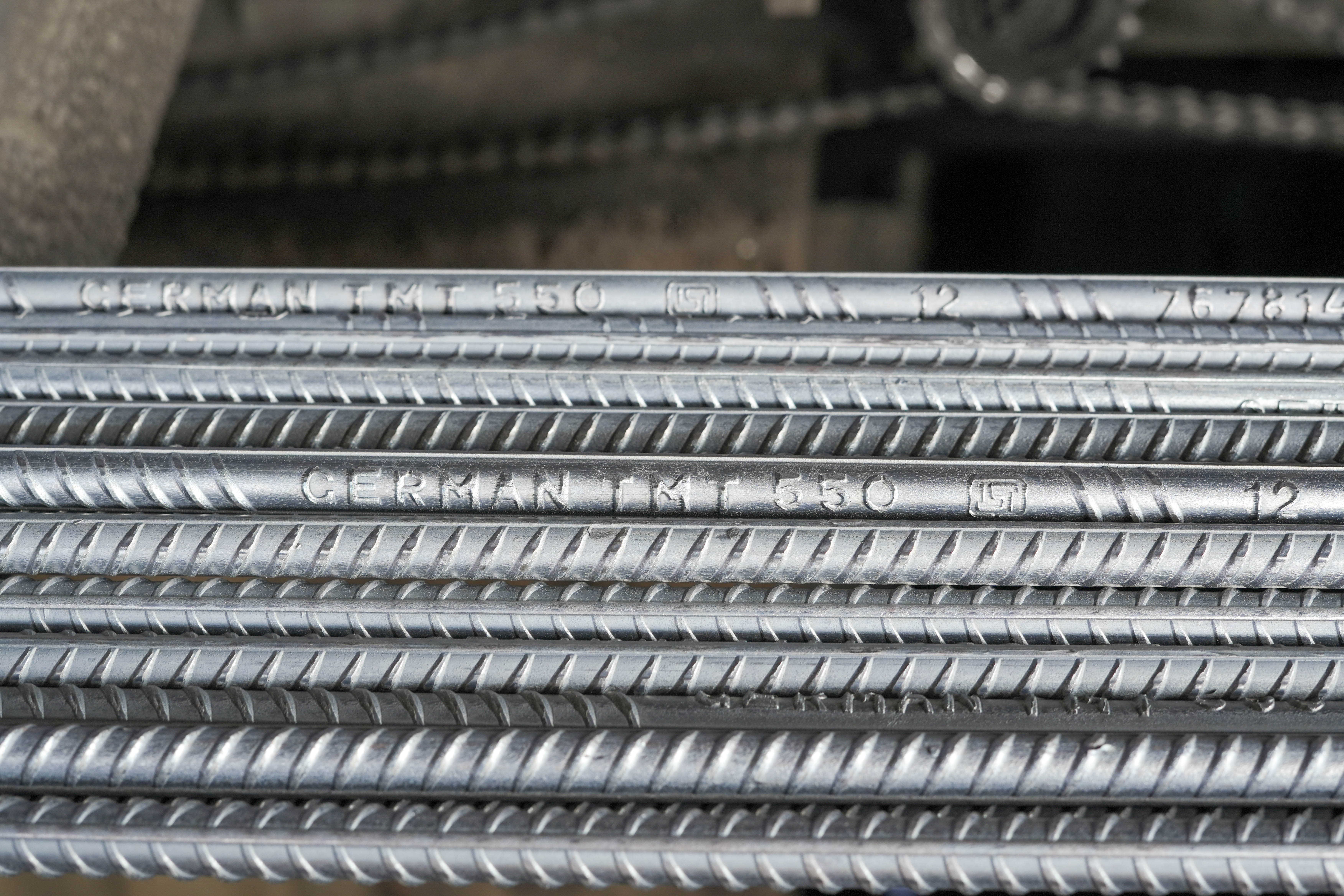
The ribbed surface of reinforcement improves mechanical interlock between steel and concrete, helping transfer stresses between the two materials.
For high-rise structures, effective reinforcement-to-concrete interaction is particularly important because structural members can be subjected to substantial forces.
This is why engineers consider rib geometry and surface characteristics when evaluating reinforcement.
German Steel's approach to reinforcement manufacturing focuses on producing TMT bars with controlled surface characteristics suitable for reinforced concrete construction.
There is no universal TMT grade that should automatically be used for every high-rise building.
The appropriate grade depends on the structural design and the requirements established by the project engineer.
Common considerations include:
Fe500D combines high yield strength with enhanced ductility and is widely used where structural designs require a balance between strength and deformation capacity.
Fe550 provides higher yield strength than Fe500 grades and may be specified where structural requirements call for higher-strength reinforcement.
Fe550D combines higher strength with enhanced ductility and can be considered where the structural design requires both characteristics.
German TMT offers multiple grades and sizes, allowing reinforcement selection to be aligned with project-specific engineering requirements.
The final grade should always be selected according to the structural design and applicable specifications.
The properties of a TMT bar are closely connected to its manufacturing process.
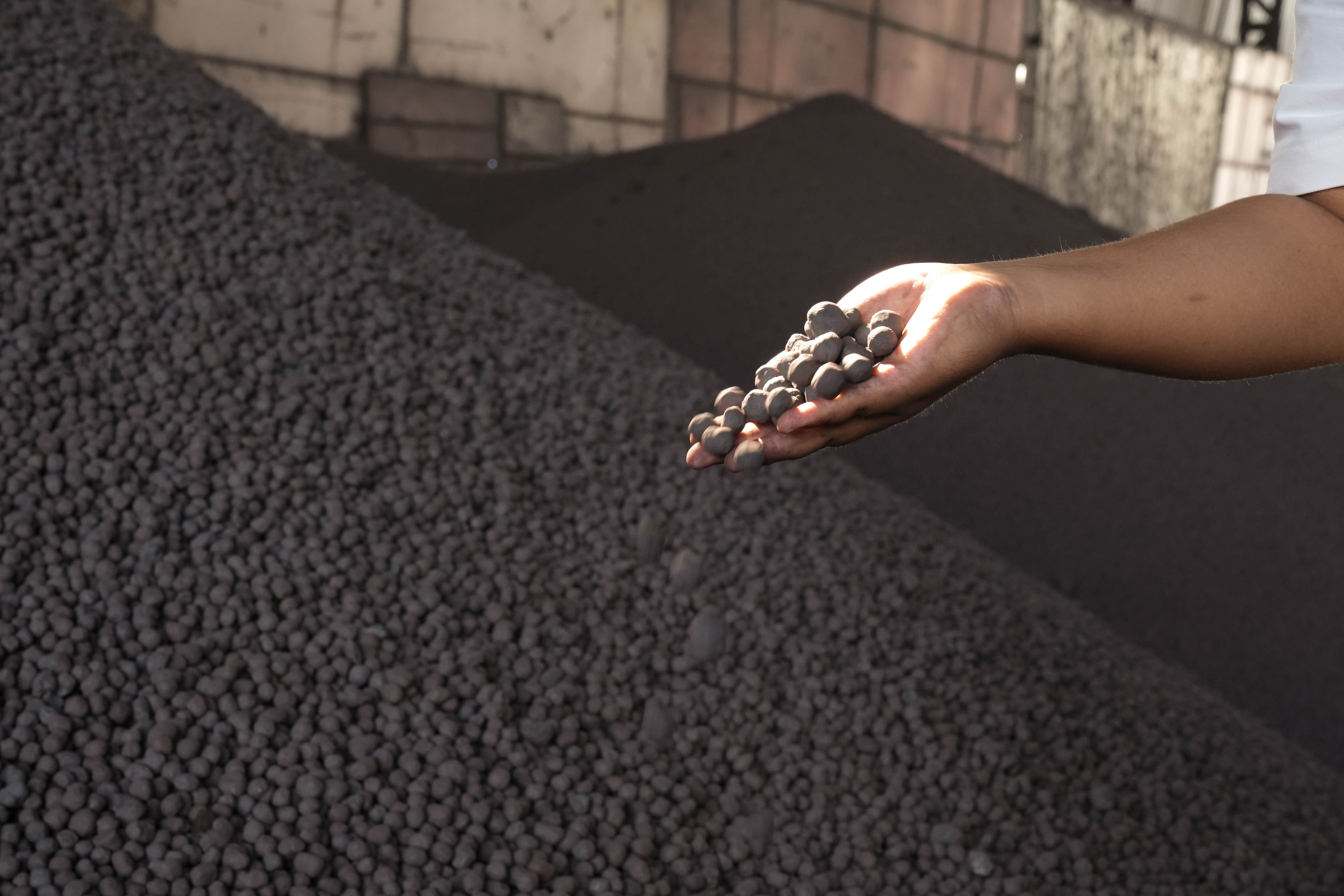
The journey from steelmaking to finished reinforcement involves multiple stages, including billet production, rolling and thermo-mechanical treatment.
Each stage contributes to the final characteristics of the bar.
German Steel uses Thermex Quenching Technology as part of its TMT production process.
Controlled quenching followed by self-tempering forms an important part of the thermo-mechanical treatment used to develop the desired combination of strength and ductility.
This manufacturing approach is particularly relevant when reinforcement is expected to perform consistently across demanding structural applications.
You can also explore how Thermex Quenching Technology improves strength and ductility.
High-rise projects can consume substantial quantities of reinforcement over long construction periods.
Material may arrive in multiple batches as different floors and structural elements progress.
For project teams, consistency across these deliveries helps make reinforcement procurement and processing more predictable.
This includes consistency in:
For a project where reinforcement is continuously being fabricated and installed, predictable material characteristics can support smoother execution.
Not every high-rise project requires specialised corrosion-resistant reinforcement.
However, environmental conditions can influence reinforcement selection.
Buildings exposed to coastal environments, high humidity, aggressive environments or specific durability requirements may require additional corrosion protection strategies.
German Steel offers Epoxy Coated TMT Bars as a specialised reinforcement solution for projects where additional corrosion protection is required.
The appropriate reinforcement solution should be determined according to the project's environmental exposure, structural design and durability requirements.
High-rise projects involve substantial reinforcement fabrication.
Manually cutting and bending large volumes of steel at the construction site can require considerable coordination between reinforcement schedules, labour and material inventory.
Factory-based Cut and Bend processing provides an alternative approach.
Bars can be prepared according to project drawings and reinforcement schedules before delivery.
This can help project teams organise reinforcement by:
German Steel's Cut and Bend reinforcement capabilities can support this more structured approach to reinforcement preparation.
The foundation transfers the building's loads into the ground, making reinforcement selection an important part of foundation design.
Depending on the project, reinforcement may be used in:
Large foundation elements can require significant reinforcement quantities.
The TMT grade, diameter, spacing and reinforcement arrangement should therefore be determined according to structural calculations and the project's engineering specifications.
Columns and shear walls are among the most important vertical structural elements in many high-rise buildings.
Columns transfer vertical loads while shear walls and structural cores can play an important role in resisting lateral forces.
These applications can place demanding requirements on reinforcement.
Strength and ductility become important considerations, while fabrication accuracy is equally relevant because reinforcement cages and assemblies must follow detailed structural drawings.
Consistent TMT characteristics can help reinforcement fabrication remain aligned with those requirements.
Beams and slabs form another major part of the reinforced concrete system.
Their reinforcement must be fabricated and positioned according to the structural design.
High-rise projects can involve repetitive reinforcement patterns across multiple floors, making accurate fabrication particularly valuable.
When reinforcement is prepared using controlled Cut and Bend processes, project teams can receive bars organised around the dimensions and shapes required for individual structural elements.
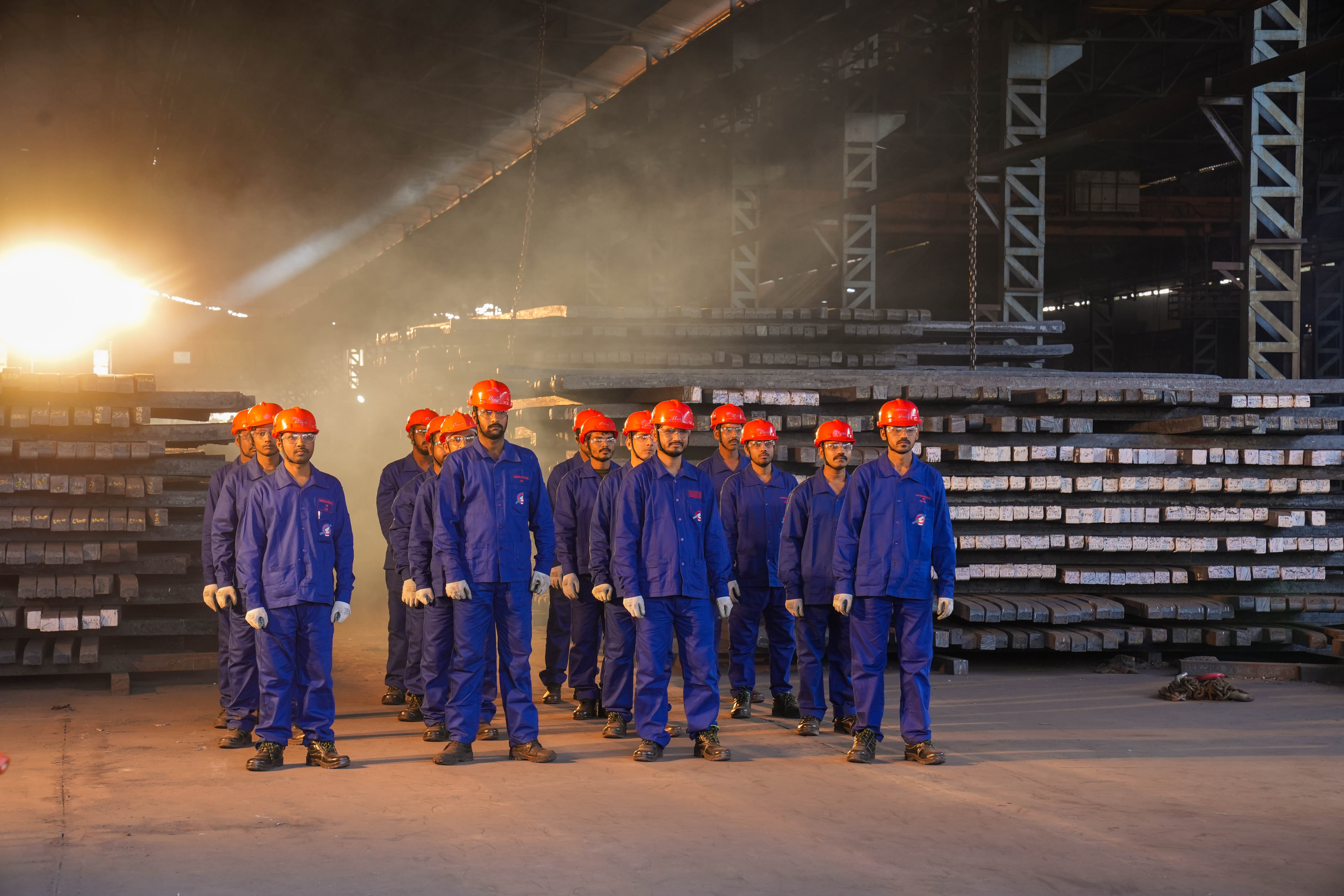
German Steel combines TMT manufacturing with an integrated steel production ecosystem and reinforcement processing capabilities.
Its manufacturing operations support the production of TMT reinforcement in multiple grades and sizes, while its TMT product range provides options for different structural requirements.
For projects requiring more specialised reinforcement solutions, German Steel also provides epoxy-coated reinforcement and Cut and Bend capabilities.
This allows project teams to consider reinforcement not simply as a commodity but as part of a broader structural and construction execution strategy.
Before finalising reinforcement for a high-rise project, project teams should evaluate several factors.
The selected grade and diameter should match the structural engineer's drawings and specifications.
Yield strength, tensile strength and elongation should meet the specified requirements.
Where seismic or dynamic loading is relevant, ductility should receive appropriate attention.
The reinforcement should be suitable for the fabrication requirements specified by the project.
Surface rib characteristics should support effective mechanical interaction with concrete.
Coastal, humid or aggressive environments may require additional corrosion protection.
The manufacturer should have appropriate process controls and quality systems for the specified product.
Large projects need dependable material availability and may benefit from organised Cut and Bend reinforcement.
High-rise construction requires more than simply selecting a high-strength steel grade.
The reinforcement must work as part of an engineered system where strength, ductility, bendability, bonding, durability and fabrication all contribute to construction performance.
That makes the choice of TMT manufacturer an important project decision.
German Steel's combination of TMT manufacturing, controlled thermo-mechanical processing and reinforcement processing capabilities provides construction teams with a broader solution for modern structural requirements.
For high-rise buildings, the objective is not to choose the strongest-looking bar.
It is to select reinforcement that is appropriate for the structural design, manufactured to the required standards and capable of being processed and installed with confidence.
There is no single TMT grade that is universally best for every high-rise building. The appropriate grade should be selected according to structural design, loading conditions, applicable standards and the recommendations of the structural engineer.
Fe550D can be specified for structural applications requiring a combination of higher yield strength and enhanced ductility. Its suitability depends on the project's structural design and engineering specifications.
Ductility allows reinforcement to undergo deformation while maintaining structural integrity. It can be particularly important when structures experience dynamic or seismic loading.
Yes. High-rise buildings require reinforcement in many shapes and configurations. Suitable bendability supports accurate fabrication according to structural drawings.
No. The need for specialised corrosion-resistant reinforcement depends on environmental exposure, durability requirements and structural specifications.
Yes. Cut and Bend reinforcement can be prepared according to project-specific dimensions and shapes, making it suitable for projects where reinforcement fabrication needs to be organised and precise.
Consider the structural engineer's specification, TMT grade, strength, ductility, bendability, concrete bonding, corrosion requirements, manufacturing quality, certifications, supply capability and reinforcement processing requirements.
[ Where we share insights, updates, and stories that matter in the world of construction and beyond. ]
Learn how to store TMT bars correctly at construction sites in Gujarat. Explore practical TMT storage, handling and reinforcement management practices for contractors.
Discover why consistent TMT bar quality matters for large construction projects and how controlled manufacturing, quality checks and reliable reinforcement support project performance.

.jpg)


.webp)