

How to Store TMT Bars at Construction Sites in Gujarat: A Practical Guide
September 8, 2026
July 10, 2026
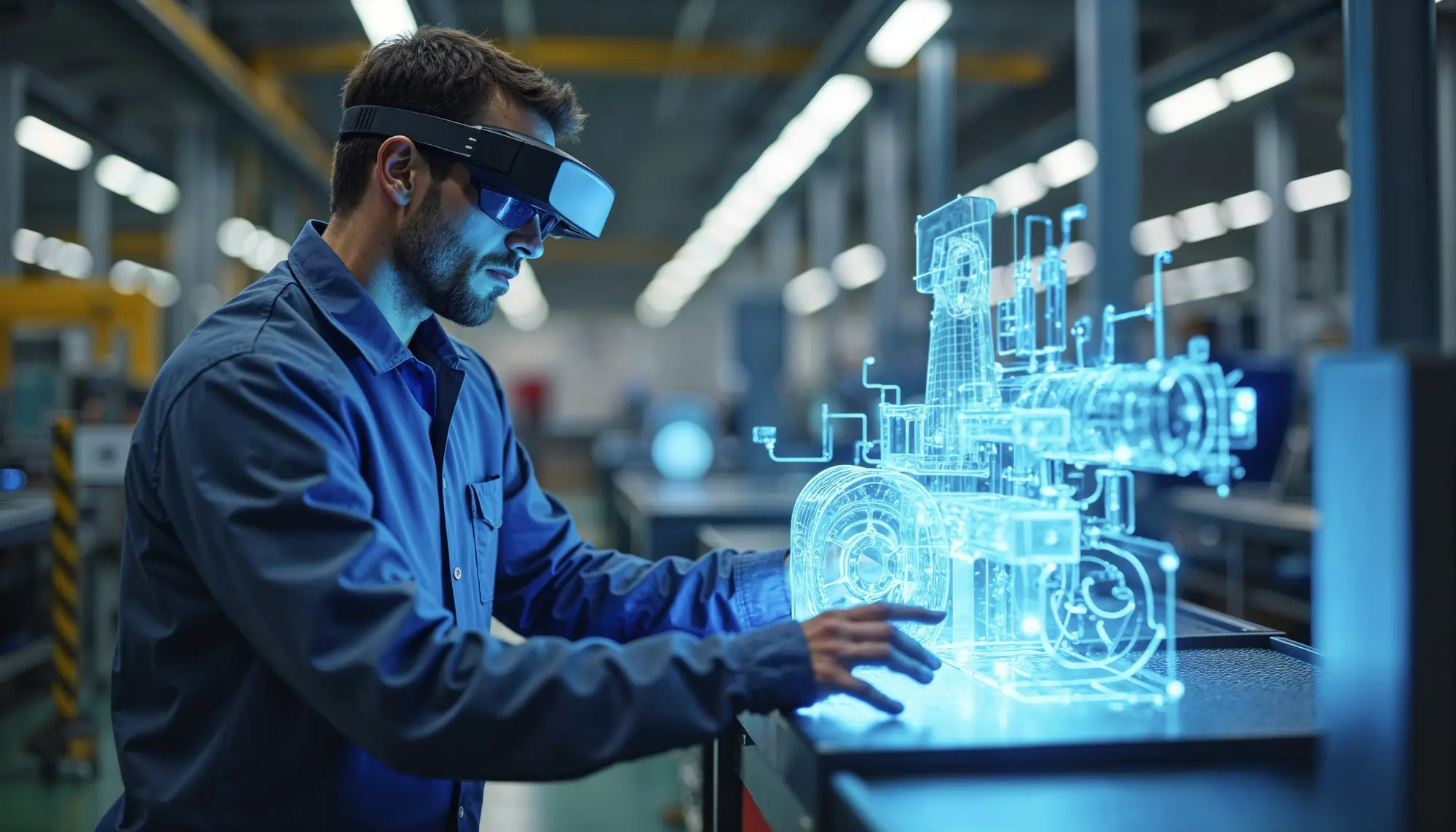
India’s steel industry is entering a period where growth and digital transformation are increasingly moving together.
As steelmaking capacity expands and manufacturers respond to rising infrastructure and industrial demand, the conversation is no longer focused only on how much steel India can produce. Attention is also turning towards how technology can improve productivity, efficiency, quality, resource utilization, and global competitiveness.
In 2026, artificial intelligence, automation, digital technologies, and data-driven manufacturing have become increasingly important parts of this conversation.
The Government of India has also placed greater emphasis on digital transformation across the steel sector, highlighting the potential role of technologies such as artificial intelligence, machine learning, Industrial Internet of Things, robotics, digital twins, and advanced data analytics.
So, what does this technological shift mean for the future of Indian steel manufacturing?
India is already one of the world’s largest steel-producing countries, and the industry continues to expand alongside infrastructure, construction, manufacturing, transportation, and energy development.
Growth at this scale creates new opportunities, but it also brings greater operational complexity.
Steel manufacturers must increasingly focus on:
Digital technologies can support manufacturers in addressing many of these challenges by providing better operational visibility and enabling more informed decision-making.
Artificial intelligence has become one of the most discussed technologies across almost every industry.
In steel manufacturing, however, its potential applications are highly practical.
AI and machine learning systems can potentially help analyse large volumes of operational data, identify patterns, improve production planning, support quality monitoring, and assist with predictive maintenance.
Rather than replacing traditional manufacturing expertise, these technologies can support engineers and production teams with better information.
Potential applications across the steel industry include:
As these technologies mature, their role across industrial manufacturing is expected to continue evolving.
Automation has already transformed many areas of modern manufacturing.
Automated systems can help manufacturers maintain greater process consistency, improve production efficiency, and reduce dependence on repetitive manual operations.
In the steel industry, automation may be applied across:
For products such as TMT Bars, manufacturing consistency remains an important consideration for projects that require reliable reinforcement across large quantities.
Smart manufacturing goes beyond installing automated machinery.
It involves creating manufacturing environments where machines, data, processes, and people are increasingly connected.
Technologies such as Industrial Internet of Things systems can allow equipment and production processes to generate real-time operational data.
This information can potentially help manufacturing teams monitor:
The objective is to create manufacturing systems that are more visible, measurable, and responsive.
Digital twins are virtual representations of physical equipment, processes, or manufacturing environments.
By using operational data, manufacturers can create digital models that help them better understand how physical systems are performing.
Potential industrial applications include:
While adoption varies significantly between companies and manufacturing sectors, digital twin technology is becoming an increasingly important part of the global Industry 4.0 conversation.
Traditional maintenance often follows predetermined schedules or takes place after equipment problems occur.
Predictive maintenance takes a different approach.
By analysing equipment data, sensors, and operational patterns, manufacturers can potentially identify signs of problems before major failures occur.
This can help support:
For large manufacturing facilities, even small improvements in equipment availability can contribute to significant operational benefits.
Quality remains one of the most important considerations in steel manufacturing.
Digital technologies can support quality management by helping manufacturers collect, monitor, and analyse production data more efficiently.
Modern quality systems may integrate:
These systems can complement traditional physical and mechanical testing processes while improving operational visibility.
Digitalisation is influencing not only steel production but also what happens after reinforcement is manufactured.
Modern construction projects increasingly rely on detailed Bar Bending Schedules and precision reinforcement processing.
Advanced Cut & Bend Solutions allow reinforcement to be processed according to approved project specifications before arriving at construction sites.
This approach can support:
As construction projects become increasingly complex, the connection between manufacturing technology and project execution is becoming more important.
One of the most important aspects of digital manufacturing is its potential connection with sustainability.
Better data and operational visibility can help manufacturers understand how resources are being consumed across production processes.
Manufacturers may use digital systems to monitor and optimize:
This can support broader efforts to improve resource efficiency and reduce unnecessary consumption.
The growing focus on AI and digitalisation reflects a broader transformation taking place across Indian manufacturing.
Steel companies increasingly operate in an environment where customers, project stakeholders, and global markets expect more than production capacity alone.
Manufacturers are also being evaluated on:
This means the next phase of steel industry growth is likely to be defined by the combination of scale, technology, and responsible manufacturing.
The changing direction of India’s steel industry reinforces the importance of continuous investment in manufacturing infrastructure, operational efficiency, sustainability, and value-added solutions.
With manufacturing operations in Kutch and Samakhiyali, Gujarat, and its corporate headquarters in Ahmedabad, German Steel manufactures TMT Bars, CRS Green Steel, and Epoxy Coated TMT Bars, alongside advanced Cut & Bend Solutions.
The company’s manufacturing ecosystem incorporates wind and solar energy, Waste Heat Recovery Systems, dedicated water reserves, and responsible resource management practices.
As the wider steel industry moves towards greater modernization and efficiency, German Steel’s focus on manufacturing capability, precision reinforcement processing, sustainability, and value-added solutions reflects several of the broader priorities shaping the future of the sector.
The adoption of AI and digital technologies across the steel industry will not happen overnight.
Manufacturing facilities differ significantly in scale, infrastructure, investment capabilities, and technological readiness.
However, the direction of the industry is becoming clearer.
Technology is expected to play an increasingly important role in helping manufacturers improve efficiency, manage resources, maintain quality, and remain competitive.
The steel plants of the future are likely to combine:
India’s steel industry in 2026 is not only growing—it is evolving.
Artificial intelligence, automation, Industrial Internet of Things, digital twins, robotics, and advanced data analytics are becoming part of the national conversation around the future of steel manufacturing.
The challenge for the industry will be turning these technologies into practical improvements in productivity, quality, sustainability, and operational efficiency.
As India continues expanding its steelmaking capabilities, manufacturers that successfully combine modern technology with manufacturing expertise and responsible resource management will be better positioned for the next phase of industrial growth.
For German Steel, this evolving landscape reinforces the importance of continuing to build around strong manufacturing capabilities, sustainable operations, precision processing, and reinforcement solutions designed for the changing requirements of India’s infrastructure and construction sectors.
Potential applications of AI in steel manufacturing include production optimization, predictive maintenance, quality analysis, energy management, demand forecasting, and supply chain planning.
Smart manufacturing involves using connected machines, data, automation, and digital technologies to improve visibility, efficiency, and decision-making across manufacturing operations.
Predictive maintenance uses equipment data and operational patterns to identify potential maintenance requirements before unexpected failures occur.
Digital systems can help manufacturers monitor energy, water, equipment performance, raw material utilization, and production processes more effectively, supporting broader resource-efficiency initiatives.
German Steel manufactures TMT Bars, CRS Green Steel, and Epoxy Coated TMT Bars, alongside advanced Cut & Bend Solutions.
[ Where we share insights, updates, and stories that matter in the world of construction and beyond. ]
Learn how to store TMT bars correctly at construction sites in Gujarat. Explore practical TMT storage, handling and reinforcement management practices for contractors.

Learn how to select TMT bars for high-rise buildings based on strength, ductility, bendability, bonding, corrosion resistance and project requirements.

.jpg)


.webp)