

How to Store TMT Bars at Construction Sites in Gujarat: A Practical Guide
September 8, 2026
July 7, 2026
India’s steel industry is entering a period of significant transformation as sustainability, carbon efficiency, and responsible manufacturing become increasingly important to the future of industrial development.
The Government of India is working to encourage greater adoption of green steel, including measures designed to create demand for lower-emission steel through public procurement.
This shift could play an important role in accelerating investment in cleaner technologies and supporting the transition towards more sustainable steel manufacturing across the country.
For manufacturers such as German Steel, the growing focus on sustainability reinforces the importance of renewable energy, energy efficiency, resource optimization, and responsible production practices.
Green steel generally refers to steel manufactured with lower carbon emissions compared to conventional production processes.
However, the definition of green steel can vary depending on the manufacturing technology, energy sources, raw materials, and carbon intensity involved in production.
To create a standardized framework for the Indian steel industry, the Ministry of Steel introduced India’s Green Steel Taxonomy.
The framework establishes a method for defining and categorizing green steel based on the carbon emissions generated during production.
This provides manufacturers, policymakers, infrastructure developers, and other industry stakeholders with a clearer benchmark for evaluating lower-emission steel.
Producing green steel requires substantial investment in technology, renewable energy, manufacturing infrastructure, and energy-efficient processes.
However, increasing production alone may not be enough to accelerate the transition.
There must also be sufficient demand for sustainably manufactured steel.
Government and public-sector procurement can potentially play an important role in creating this demand.
Large infrastructure projects require significant quantities of steel. Encouraging the use of lower-emission steel in such projects can create stronger market opportunities for manufacturers investing in sustainable production.
It can also encourage wider adoption of green steel across infrastructure, construction, industrial, and commercial projects.
Government infrastructure projects represent an important source of steel demand in India.
Highways, railways, bridges, airports, energy infrastructure, public buildings, and urban development projects require large quantities of construction materials.
Introducing green steel requirements or procurement preferences can help create a reliable market for sustainably manufactured steel.
This can encourage manufacturers to invest further in:
Over time, stronger demand can help accelerate the development of a larger green steel ecosystem in India.
India’s Green Steel Taxonomy provides a framework for measuring and classifying steel based on carbon emissions generated during production.
The framework uses emissions intensity as an important measurement for determining whether steel can qualify for green steel classification.
The taxonomy introduces a rating-based approach designed to encourage manufacturers to progressively reduce emissions.
Creating a common classification framework is important because it provides greater clarity across the steel industry.
Manufacturers can work towards defined sustainability benchmarks, while buyers and project stakeholders can better understand the environmental characteristics of the steel they procure.
The global steel industry is facing increasing pressure to reduce carbon emissions.
Steel manufacturing requires significant amounts of energy and resources, making emissions reduction one of the industry’s major long-term challenges.
As governments, infrastructure developers, investors, and construction companies increase their focus on sustainability, carbon intensity may become an increasingly important consideration when selecting steel suppliers.
Manufacturers capable of improving energy efficiency, increasing renewable energy utilization, recovering waste heat, and optimizing resources may be better positioned for the changing requirements of the industry.
At German Steel, sustainability forms part of the company’s long-term approach to manufacturing and responsible growth.
The company continues to invest in renewable energy generation through wind and solar power, energy-efficient manufacturing practices, responsible water management, and resource optimization.
German Steel also utilizes Waste Heat Recovery Systems designed to capture thermal energy generated during industrial processes and convert it into useful energy.
Together, these initiatives contribute towards developing a more efficient and environmentally responsible manufacturing ecosystem.
As infrastructure and construction stakeholders become increasingly conscious of sustainability, the demand for responsibly manufactured reinforcement solutions is likely to grow.
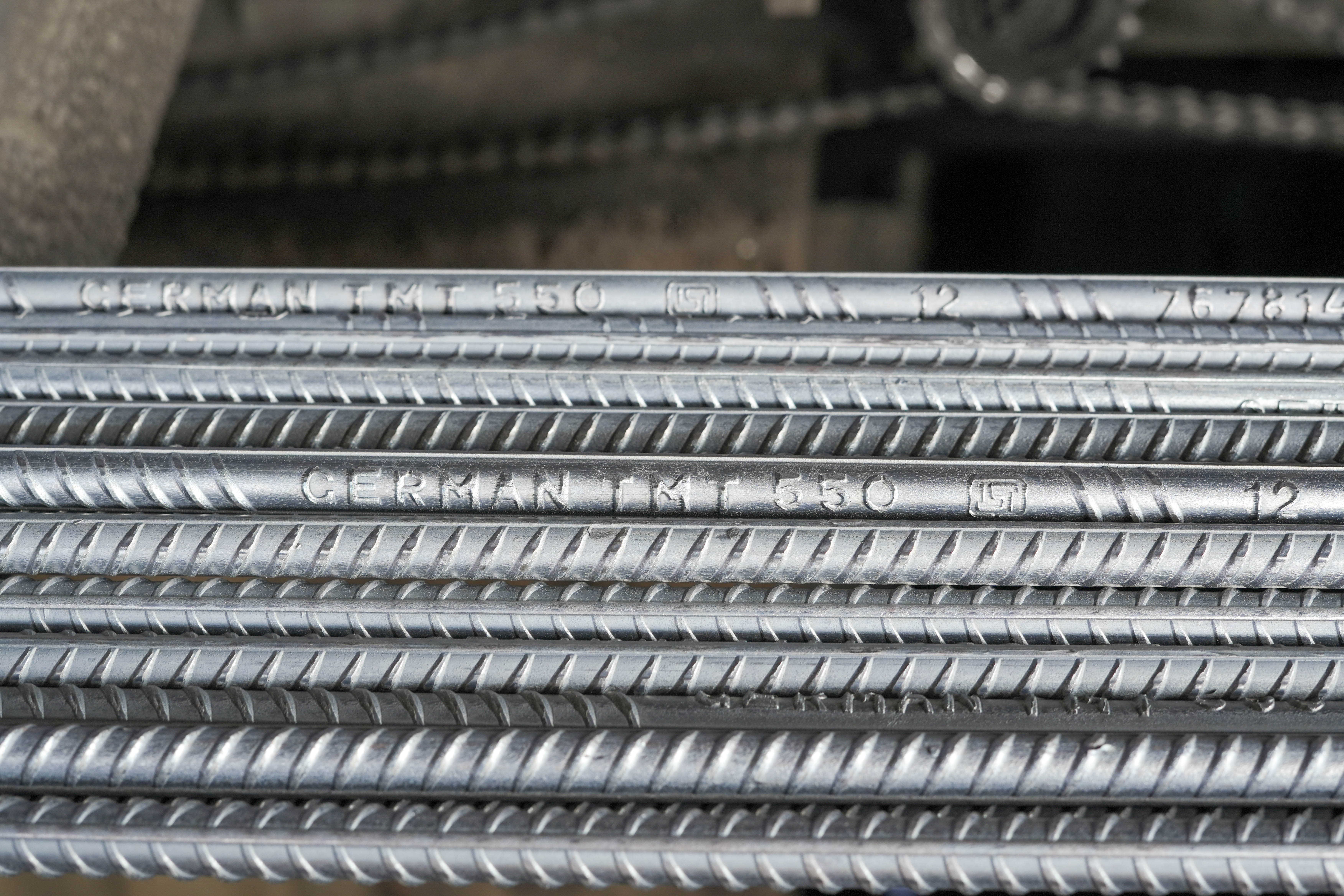
German Steel’s CRS Green Steel reflects the company’s focus on combining reinforcement performance with sustainable manufacturing practices.
The product forms part of a broader manufacturing ecosystem supported by renewable energy, resource optimization, modern technology, and responsible industrial practices.
As India strengthens its green steel policies and sustainability frameworks, products manufactured through increasingly efficient processes can play an important role in supporting the transition.
India continues to invest heavily in infrastructure development.
Highways, railways, urban infrastructure, industrial corridors, energy projects, commercial developments, and housing will continue to require significant quantities of steel.
The challenge is to meet this growing demand while improving the environmental performance of steel production.
Green steel can contribute to this objective by supporting infrastructure development with reinforcement solutions manufactured through more environmentally responsible processes.
As public and private project stakeholders increase their focus on sustainability, green steel adoption could become an increasingly important part of construction procurement strategies.
The transition towards green steel will not affect manufacturers alone.
Construction companies, infrastructure developers, architects, engineers, contractors, and procurement teams may increasingly need to consider the environmental characteristics of construction materials.
This could result in greater focus on:
As sustainability standards evolve, material selection could become an increasingly important part of environmental planning for construction projects.
The transition towards more sustainable steel production will require continued investment in technology.
Modern manufacturing systems can help improve process efficiency, reduce unnecessary resource consumption, enhance production control, and support better energy utilization.
Automation can also contribute towards greater precision and material efficiency.
German Steel continues to invest in advanced manufacturing infrastructure and automated Cut & Bend capabilities designed to improve reinforcement processing efficiency and reduce unnecessary steel wastage.
These investments demonstrate how technology and sustainability can work together across the steel manufacturing and construction ecosystem.
India’s Green Steel Taxonomy represents an important step towards developing a more structured framework for sustainable steel manufacturing.
Growing discussions around green steel procurement could further accelerate this transition by creating stronger demand for lower-emission products.
The future development of the industry will depend on collaboration between manufacturers, policymakers, infrastructure developers, technology providers, and construction stakeholders.
Manufacturers will need to continue investing in cleaner energy, efficient technology, emissions reduction, and responsible resource utilization.
At the same time, increasing demand for green steel can encourage further investment and innovation across the industry.
India’s transition towards green steel represents both a challenge and an opportunity for the steel manufacturing industry.
Meeting the country’s growing infrastructure requirements while improving environmental performance will require continuous technological advancement and responsible manufacturing.
Through renewable energy, Waste Heat Recovery Systems, responsible water management, modern manufacturing infrastructure, resource optimization, and sustainable reinforcement solutions, German Steel continues to strengthen its approach towards responsible industrial growth.
As India moves towards a more sustainable steel ecosystem, German Steel remains committed to supporting infrastructure development with quality-driven reinforcement solutions and forward-looking manufacturing practices.
Green steel generally refers to steel manufactured with lower carbon emissions compared to conventional production methods.
India’s Green Steel Taxonomy is a framework introduced by the Ministry of Steel to classify steel according to the carbon emissions intensity associated with its production.
Green steel procurement can create market demand for lower-emission steel and encourage manufacturers to invest further in sustainable technologies and production practices.
Steel manufacturers can improve environmental performance through renewable energy, energy efficiency, Waste Heat Recovery Systems, responsible water management, resource optimization, advanced technology, and emissions reduction initiatives.
German Steel supports sustainable manufacturing through renewable energy generation, Waste Heat Recovery Systems, responsible water management, resource optimization, modern manufacturing technology, and CRS Green Steel.
[ Where we share insights, updates, and stories that matter in the world of construction and beyond. ]
Learn how to store TMT bars correctly at construction sites in Gujarat. Explore practical TMT storage, handling and reinforcement management practices for contractors.

Learn how to select TMT bars for high-rise buildings based on strength, ductility, bendability, bonding, corrosion resistance and project requirements.

.jpg)


.webp)