
.avif)

How to Store TMT Bars at Construction Sites in Gujarat: A Practical Guide
September 8, 2026
June 30, 2026
Modern construction projects operate under tighter schedules, larger budgets, and higher stakeholder expectations than ever before. Whether it's a high-rise development, industrial plant, logistics park, highway, or commercial complex, every stage of construction depends on one critical factor—materials arriving at the right place, at the right time, and in the right quantity.
Among these materials, reinforcement steel plays a foundational role. Delays in steel supply can affect structural work, labour deployment, equipment scheduling, and overall project timelines.
As a result, developers and contractors increasingly view supply chain reliability as an essential part of project planning rather than simply a logistics function.
Large construction projects involve multiple activities running simultaneously.
Foundation work, reinforcement installation, shuttering, concrete placement, inspections, and subsequent construction phases are all interconnected.
If reinforcement materials are delayed, several downstream activities can also be affected, making dependable supply an important contributor to project continuity.
Supply chain reliability extends far beyond transportation.
It begins with a manufacturer's ability to consistently produce quality reinforcement while maintaining predictable production schedules and efficient distribution.
Project teams typically evaluate manufacturers based on:
Manufacturers that combine these strengths help reduce uncertainty throughout the project lifecycle.
Modern construction projects increasingly require more than standard reinforcement supply.
Many projects now integrate factory-processed reinforcement through Cut & Bend Solutions prepared according to approved Bar Bending Schedules.
By combining manufacturing with precision processing, project teams can improve:
This integrated approach is becoming increasingly common on large infrastructure and industrial projects.
For developers and EPC companies, reliability is built over time.
Consistent product quality, dependable delivery schedules, and responsive technical support help strengthen confidence throughout long-term projects.
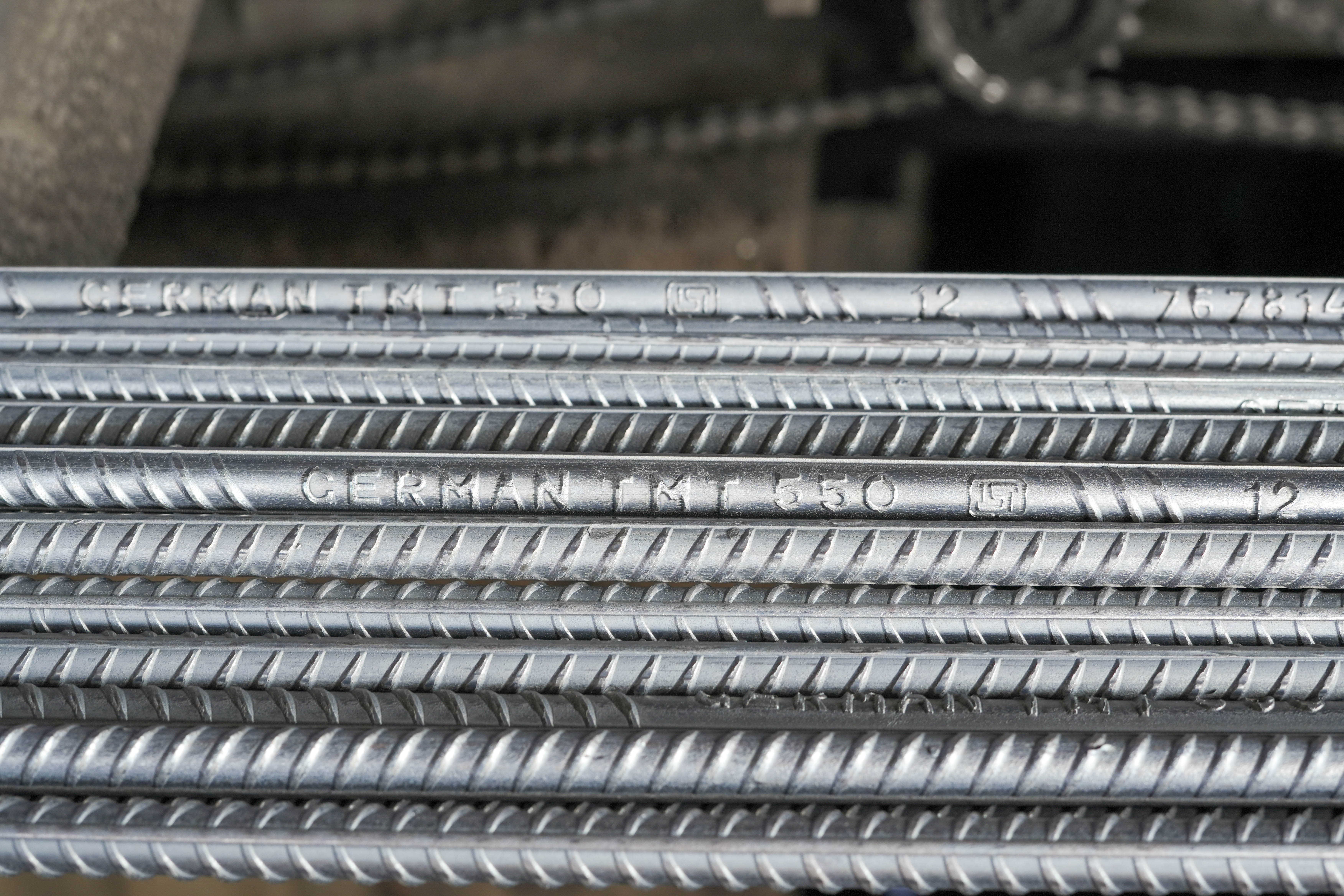
Manufacturers producing TMT Bars, CRS Green Steel, and Epoxy Coated TMT Bars are expected to maintain consistency across production batches while meeting project-specific requirements.
German Steel supports modern construction projects through an integrated manufacturing ecosystem based in Kutch and Samakhiyali, Gujarat, with its corporate headquarters in Ahmedabad.
The company combines modern manufacturing, precision Cut & Bend Solutions, quality-focused production systems, and sustainable manufacturing practices to serve infrastructure, industrial, commercial, and institutional projects across India.
Its investments in renewable energy, Waste Heat Recovery Systems, responsible water management, and advanced manufacturing technologies reflect a long-term commitment to operational excellence and dependable project support.
As India's infrastructure pipeline continues to expand, supply chain reliability will become even more important.
Manufacturers that combine quality products, efficient processing, sustainable operations, and dependable delivery will continue to play an essential role in helping construction projects stay on schedule and achieve successful outcomes.
Reliable material supply helps projects maintain schedules, improve coordination, and reduce delays caused by material shortages.
Through consistent production, dependable delivery, technical support, and value-added services such as Cut & Bend processing.
Integrated manufacturing and processing improve planning accuracy, material readiness, and overall construction efficiency.
German Steel manufactures TMT Bars, CRS Green Steel, Epoxy Coated TMT Bars, and provides advanced Cut & Bend Solutions for modern construction projects.
[ Where we share insights, updates, and stories that matter in the world of construction and beyond. ]
Learn how to store TMT bars correctly at construction sites in Gujarat. Explore practical TMT storage, handling and reinforcement management practices for contractors.

Learn how to select TMT bars for high-rise buildings based on strength, ductility, bendability, bonding, corrosion resistance and project requirements.

.jpg)


.webp)