
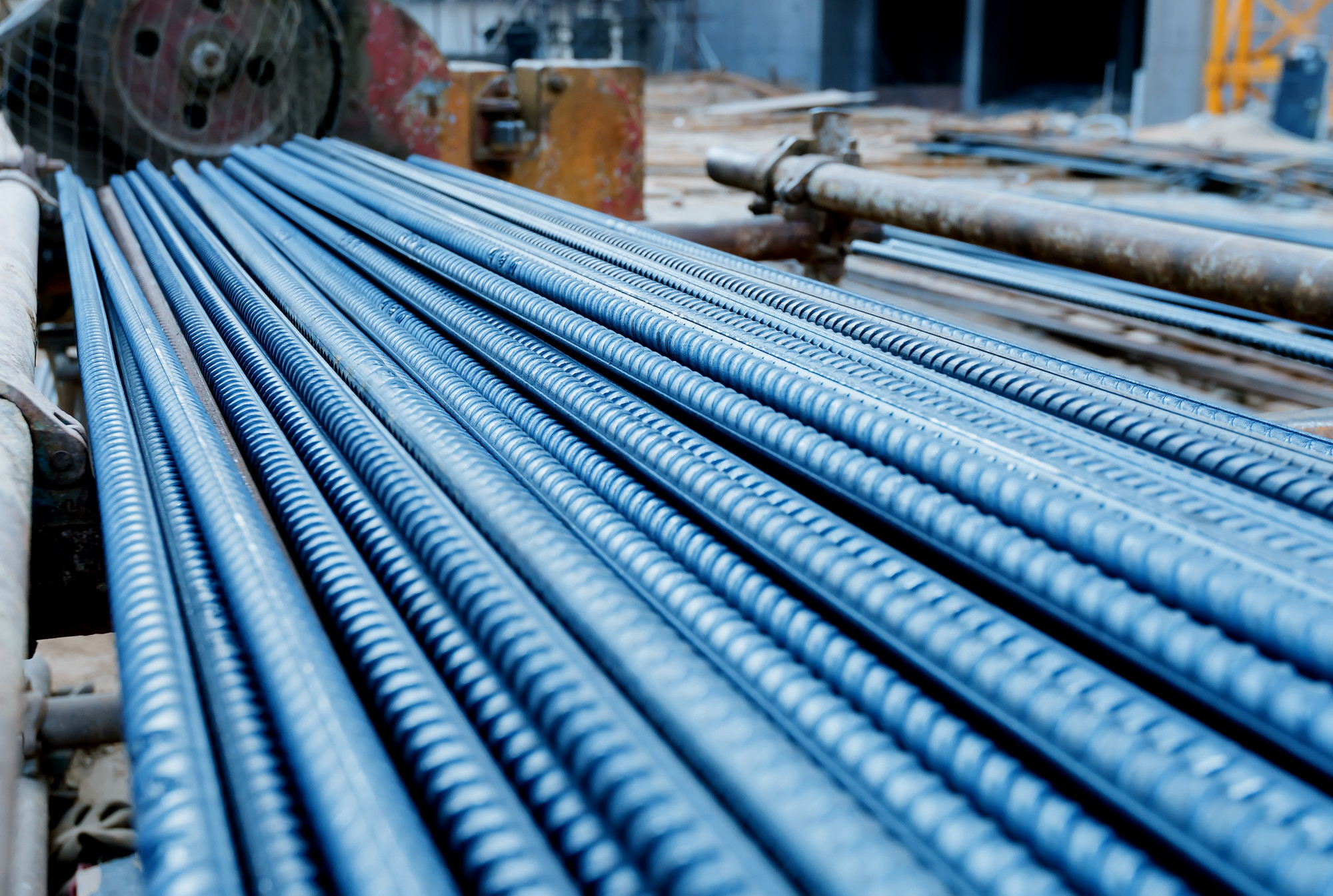

How to Store TMT Bars at Construction Sites in Gujarat: A Practical Guide
September 8, 2026
June 11, 2026
Reinforcement steel is embedded within concrete to provide strength and structural support.
Over time, environmental exposure can influence the condition of reinforcement, particularly when structures operate in demanding environments.
Factors that may contribute to corrosion-related concerns include:
For infrastructure projects expected to operate over extended periods, these factors are often evaluated during the design phase.
Unlike many buildings, infrastructure assets are often exposed to continuous environmental stress.
Examples include:
Structures exposed to changing weather conditions and continuous operational loads.
Projects located near marine environments where moisture and environmental exposure are key considerations.
Facilities operating in environments where airborne contaminants and industrial conditions may influence material performance.
Road, rail, and logistics infrastructure designed for long-term public use.
Because of these conditions, durability considerations become increasingly important throughout the project lifecycle.
When evaluating infrastructure projects, decision-makers increasingly look beyond initial construction costs.
They also consider:
Even small improvements in durability can contribute to long-term operational efficiency over the lifespan of an infrastructure asset.
As a result, material selection decisions often focus on long-term performance rather than only short-term construction requirements.
One of the most effective opportunities to address corrosion concerns occurs before construction begins.
Material selection plays an important role in determining how a structure performs under environmental exposure.
Today, engineers and consultants often evaluate reinforcement products specifically designed to support corrosion resistance objectives.
For example, CRS Green Steel is increasingly considered for projects where durability and corrosion resistance are important factors in long-term structural planning.
By addressing corrosion considerations early in the project lifecycle, stakeholders can support more resilient infrastructure outcomes.
There is no single solution suitable for every project.
The appropriate reinforcement strategy often depends on:
In some applications, project teams may also evaluate solutions such as Epoxy Coated TMT Bars as part of their corrosion protection strategy.
The final selection depends on project-specific requirements and technical recommendations.
Modern infrastructure planning increasingly links durability with sustainability.
Structures that perform effectively over longer periods may contribute to:
This relationship is encouraging greater focus on reinforcement solutions that support long-term structural performance.
While durability is a key consideration, project execution also plays an important role.
Services such as Cut & Bend Solutions help improve project efficiency by delivering reinforcement processed according to approved specifications before arriving on site.
Benefits may include:
Together, durability-focused reinforcement and efficient project execution can support improved project outcomes.
As infrastructure development continues to expand across India, long-term durability will remain a major focus for engineers, developers, consultants, and procurement teams.
Material selection decisions are increasingly influenced by:
Corrosion protection strategies will continue to play an important role in helping infrastructure projects achieve long-term operational goals.
Corrosion protection is an important consideration for modern infrastructure projects because durability influences performance long after construction is complete.
By evaluating environmental conditions, lifecycle requirements, and reinforcement solutions during project planning, stakeholders can support more resilient and efficient infrastructure development.
Products such as CRS Green Steel and Epoxy Coated TMT Bars reflect the growing emphasis on durability and long-term structural performance across modern construction projects.
Corrosion can influence durability, maintenance requirements, and long-term structural performance.
Bridges, coastal developments, industrial facilities, transportation infrastructure, and water-related projects often evaluate corrosion protection strategies.
The materials selected during project planning can affect how structures perform under environmental exposure over time.
Moisture, humidity, coastal conditions, industrial pollutants, and chemical exposure are common considerations.
By addressing durability considerations early in the project lifecycle, stakeholders can help reduce maintenance requirements and support long-term structural objectives.
[ Where we share insights, updates, and stories that matter in the world of construction and beyond. ]
Learn how to store TMT bars correctly at construction sites in Gujarat. Explore practical TMT storage, handling and reinforcement management practices for contractors.

Learn how to select TMT bars for high-rise buildings based on strength, ductility, bendability, bonding, corrosion resistance and project requirements.

.jpg)


.webp)