

How to Store TMT Bars at Construction Sites in Gujarat: A Practical Guide
September 8, 2026
June 24, 2026
Precision reinforcement processing refers to the preparation of reinforcement steel according to approved engineering drawings and Bar Bending Schedules (BBS) before delivery to site.
Rather than processing reinforcement manually on-site, steel is cut and bent using specialized machinery and controlled manufacturing processes.
Services such as Cut & Bend help ensure that reinforcement is prepared according to project specifications before reaching the construction site.
This approach supports improved planning, coordination, and execution throughout the construction process.
Large infrastructure developments often involve:
In such projects, even small inaccuracies can create downstream challenges affecting productivity and project timelines.
Precision processing helps support consistency and alignment between project planning and project execution.
Bar Bending Schedules serve as a critical reference for reinforcement planning.
These schedules define:
When reinforcement is processed according to approved BBS requirements, project teams can improve planning accuracy and reduce site-level processing activities.
This is one reason why modern infrastructure projects increasingly integrate reinforcement processing into their procurement strategy.
Construction efficiency is influenced by multiple factors, including material readiness.
Pre-processed reinforcement can help support:
As project schedules become increasingly demanding, efficient reinforcement processing continues to gain importance.
Resource optimization remains a major focus area across modern construction projects.
Project stakeholders are increasingly looking for ways to:
Precision reinforcement processing supports these objectives by aligning material preparation with actual project requirements.
As sustainability and efficiency become increasingly important, resource-conscious planning is receiving greater attention throughout the industry.
Advancements in processing technology have significantly improved the capabilities of reinforcement manufacturing and preparation.
Modern reinforcement processing facilities can support:
Technology-driven operations help improve reliability and consistency across large-scale construction projects.
This evolution is changing how reinforcement is prepared, supplied, and integrated into project workflows.
Procurement decisions today extend beyond material sourcing.
Project teams increasingly evaluate:
This broader perspective is influencing reinforcement procurement across infrastructure and industrial sectors.
The objective is not simply to purchase reinforcement, but to improve overall project execution.
Infrastructure projects are expected to perform for decades.
As a result, reinforcement planning is often discussed alongside durability and lifecycle considerations.
Project stakeholders may evaluate solutions such as:
depending on project requirements, environmental conditions, and long-term performance objectives.
When combined with precision Cut & Bend processing, these solutions can support a more integrated construction planning approach.
As infrastructure investments continue to grow, expectations around project execution are also evolving.
Stakeholders increasingly prioritize:
Precision reinforcement processing directly supports these objectives by helping bridge the gap between engineering design and construction execution.
The future of infrastructure development is expected to place greater emphasis on technology, efficiency, and operational excellence.
Reinforcement processing will continue to play an important role in supporting:
As construction projects become larger and more technically demanding, precision processing will remain an important component of modern infrastructure development.
Precision reinforcement processing has become an increasingly important part of modern infrastructure construction.
By improving planning accuracy, supporting construction efficiency, optimizing resource utilization, and enhancing project coordination, solutions such as Cut & Bend are helping reshape reinforcement management across the construction industry.
As project requirements continue to evolve, precision processing is expected to remain a key contributor to efficient and well-coordinated infrastructure development.
Precision reinforcement processing involves preparing reinforcement steel according to approved engineering drawings and Bar Bending Schedules before delivery to site.
A Bar Bending Schedule is a detailed document that specifies reinforcement dimensions, shapes, quantities, and bending requirements for construction projects.
Precision processing helps improve planning accuracy, construction efficiency, project coordination, and resource utilization.
Cut & Bend processing reduces on-site reinforcement preparation requirements and helps deliver reinforcement ready for installation according to approved specifications.
Depending on project requirements, stakeholders often evaluate TMT Bars, CRS Green Steel, Epoxy Coated TMT Bars, and Cut & Bend solutions.
[ Where we share insights, updates, and stories that matter in the world of construction and beyond. ]
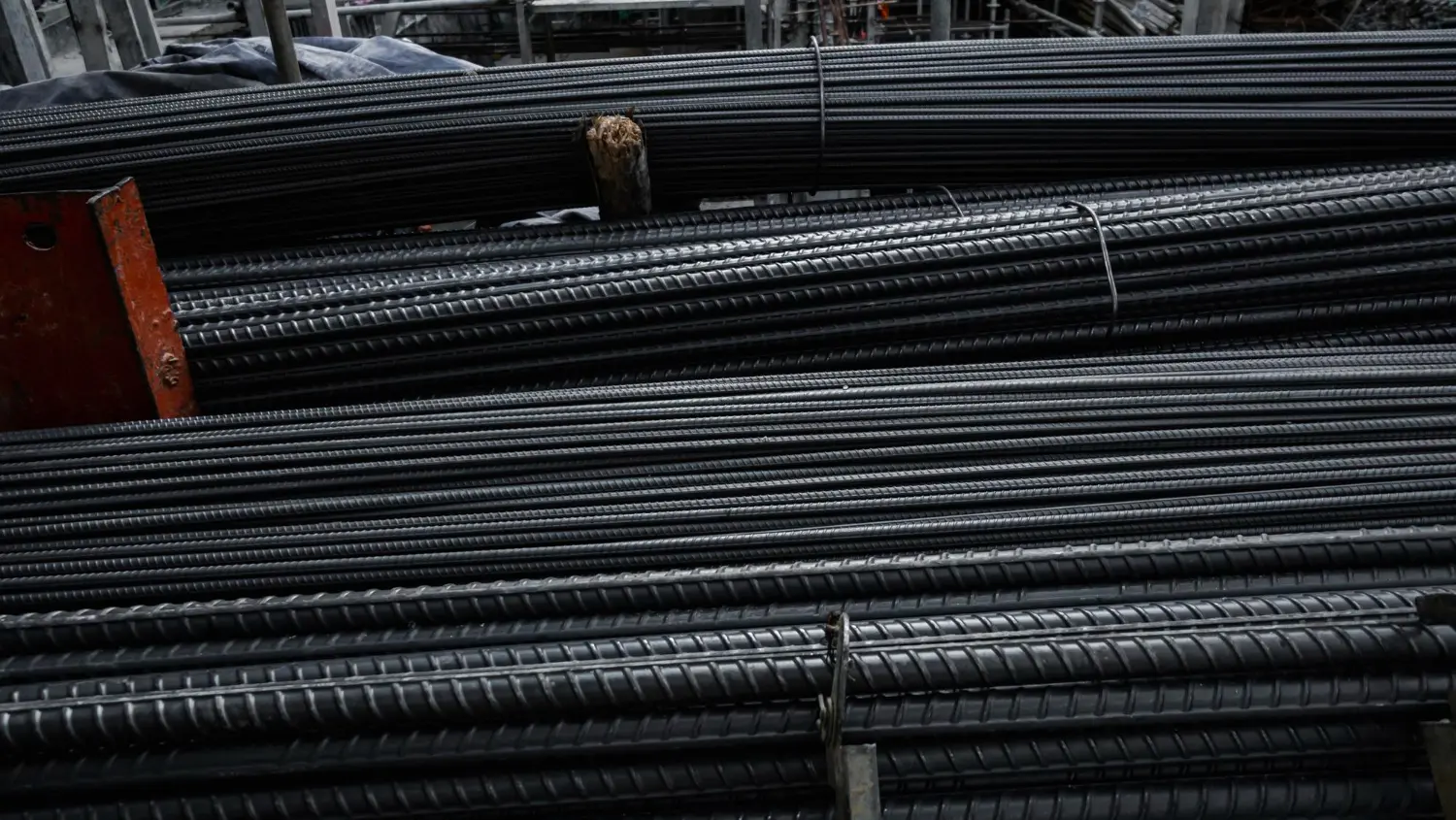
Learn how to store TMT bars correctly at construction sites in Gujarat. Explore practical TMT storage, handling and reinforcement management practices for contractors.

Learn how to select TMT bars for high-rise buildings based on strength, ductility, bendability, bonding, corrosion resistance and project requirements.



.jpg)


.webp)