

How to Store TMT Bars at Construction Sites in Gujarat: A Practical Guide
September 8, 2026
August 16, 2026
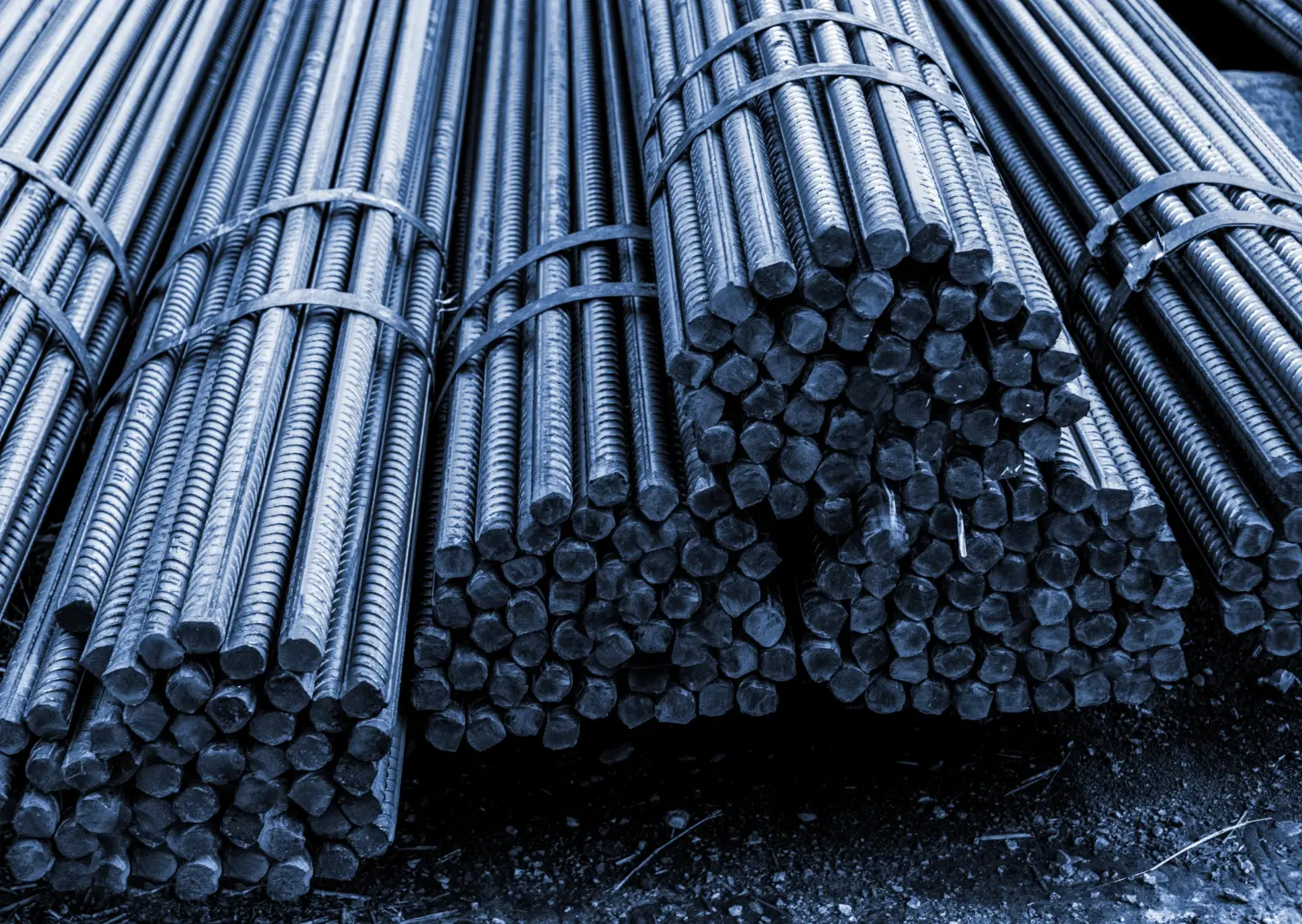
A TMT bar may look simple when it arrives at a construction site, but the performance of that bar is determined long before it reaches the foundation, column, beam, or slab.
Behind every consistent reinforcement bar is a combination of steelmaking, controlled processing, temperature management, rolling technology, cooling, testing, and quality control.
For German Steel, manufacturing technology is at the centre of its approach to producing reinforcement for India's construction and infrastructure sector.
With manufacturing operations in Kutch and Samakhiyali, Gujarat, German Steel combines modern production infrastructure with Thermex Quenching Technology, quality-focused manufacturing, and a portfolio that includes TMT Bars, Epoxy Coated TMT Bars, CRS Green Steel, and Cut & Bend Solutions.
The quality of reinforcement steel cannot be judged simply by its appearance.
A TMT bar needs to achieve the required balance of strength, ductility, bendability, weldability, and dimensional consistency. Achieving these properties depends on controlling the manufacturing process at multiple stages.
This is why the manufacturing system behind a TMT bar matters as much as the finished product itself.
German Steel's approach focuses on process control and consistency, helping produce reinforcement designed for the requirements of modern construction.
One of the defining technologies behind German Steel TMT Bars is Thermex Quenching Technology.
The process involves controlled cooling of the hot-rolled bar followed by self-tempering. This creates a combination of different metallurgical structures within the bar, helping develop the balance of strength and ductility required from TMT reinforcement.
German Steel's TMT Bars are manufactured using this Thermex-based process.
The importance of the technology lies not simply in achieving high strength, but in developing reinforcement with a balanced set of mechanical properties suitable for demanding structural applications.
For a deeper explanation of the technology itself, readers can explore German Steel's existing article on What Is Thermex Quenching Technology and Why Does It Matter?.
Before the controlled cooling stage, the steel passes through the rolling process that determines the bar's dimensions and surface characteristics.
Rolling needs to be carefully controlled to achieve the specified diameter, shape, and rib geometry.
This matters because reinforcement does not work independently inside concrete.
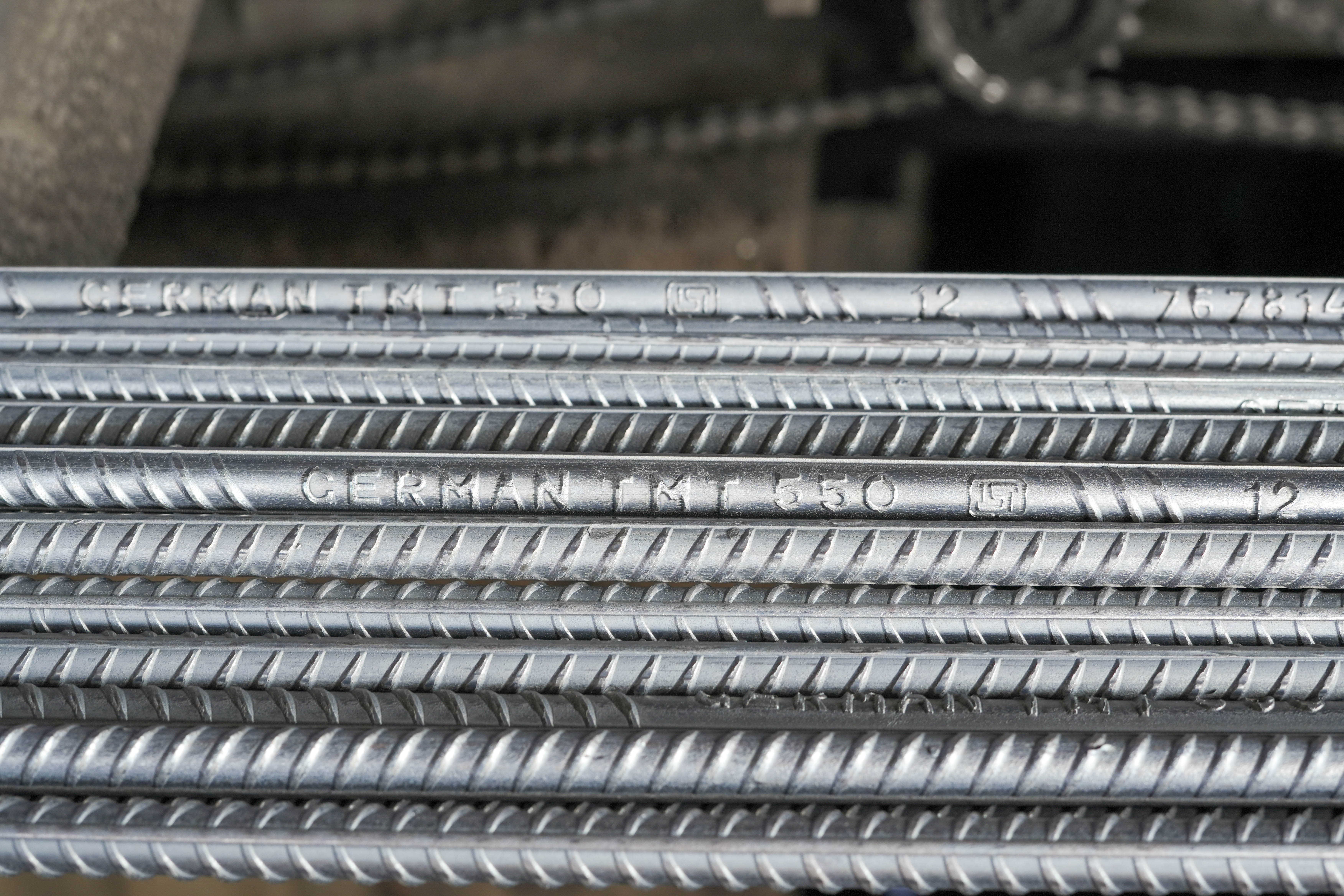
The ribs on a TMT bar contribute to mechanical interaction and anchorage between steel and concrete. Consistency in the finished bar therefore becomes an important part of reinforcement quality.
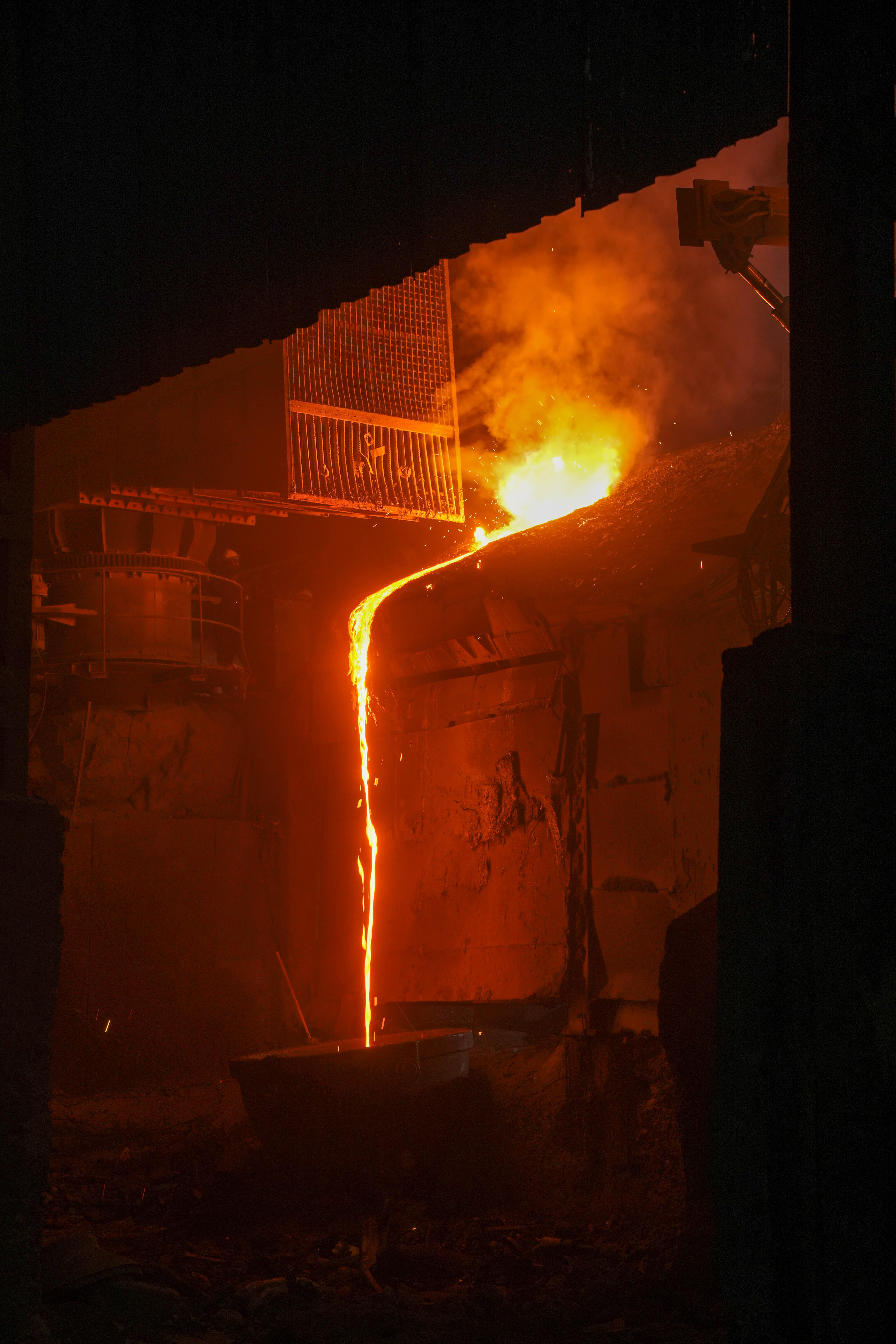
TMT manufacturing is fundamentally a controlled thermal process.
The temperature of the steel during rolling and the subsequent cooling process influences the metallurgical structure that develops within the bar.
Controlled quenching rapidly cools the outer surface while the heat retained in the core contributes to self-tempering. The resulting structure provides the basis for the required combination of strength and ductility.
For a large-scale manufacturer, maintaining consistency in these conditions across production is essential.
Technology alone does not guarantee a reliable product.
Manufacturing systems need to be supported by quality-control processes that verify whether the finished reinforcement meets the required specifications.
Parameters relevant to TMT reinforcement can include:
German Steel's manufacturing and quality systems are designed around maintaining consistency across production.
Its portfolio and manufacturing information highlight compliance with applicable BIS standards and quality-management systems supporting its steel manufacturing operations.
A small residential project and a major infrastructure development may use the same category of reinforcement, but the scale of procurement can be dramatically different.
Large projects can require substantial quantities of reinforcement delivered according to planned construction schedules.
For developers, EPC contractors, infrastructure companies, and procurement teams, this makes manufacturing capability an important part of supplier evaluation.
A reliable TMT manufacturer needs to deliver not only the required product but also consistency and supply reliability across project requirements.
German Steel's manufacturing presence in Gujarat supports this larger role in India's construction supply chain.
German Steel's manufacturing capabilities extend beyond conventional TMT reinforcement.
Where a project requires additional corrosion protection, Epoxy Coated TMT Bars provide an additional protective barrier over the reinforcement.
For projects with sustainability considerations, CRS Green Steel forms part of German Steel's portfolio of specialised steel solutions.
And when reinforcement needs to arrive at the construction site in predetermined shapes and dimensions, Cut & Bend Solutions can help move reinforcement processing from the construction site into a controlled manufacturing environment.
Together, these solutions allow German Steel to address different requirements across India's construction industry.
Modern steel manufacturing is also increasingly being evaluated through the lens of resource efficiency.
German Steel's manufacturing operations incorporate renewable energy infrastructure, including wind and solar power, alongside Waste Heat Recovery Systems and water-management initiatives.
These investments complement the company's manufacturing capabilities by focusing on how energy and resources are used throughout production.
The company's approach to sustainability is detailed in its Sustainability initiatives, which include renewable energy and resource-efficiency measures across its operations.
When selecting a TMT manufacturer, buyers often focus on the grade and price of the reinforcement.
Those factors matter, but they are only part of the decision.
Project teams should also consider:
A manufacturer with a strong production ecosystem can provide greater confidence when reinforcement is being procured for projects where quality and consistency are critical.
India's construction industry is becoming larger and more technically demanding.
High-rise buildings, highways, bridges, industrial facilities, commercial developments, renewable energy infrastructure, and urban projects all require reinforcement capable of meeting defined structural and durability requirements.
German Steel's manufacturing operations in Gujarat are built around supporting these requirements.
From Thermex-based TMT manufacturing and quality control to renewable energy, Waste Heat Recovery, Epoxy Coated TMT, CRS Green Steel, and Cut & Bend processing, the company's capabilities extend across multiple stages of modern reinforcement supply.
Ultimately, high-performance TMT is not created at the construction site.
It begins inside the manufacturing plant—with technology, process control, engineering expertise, and a commitment to consistency.
And that is where German Steel continues to build its strength.
German Steel manufactures its TMT Bars using Thermex Quenching Technology, involving controlled quenching and self-tempering to develop the desired combination of strength and ductility.
Manufacturing technology influences important properties such as strength, ductility, bendability, weldability, dimensional consistency, and surface characteristics.
German Steel has manufacturing operations in Kutch and Samakhiyali, Gujarat, with its head office in Ahmedabad.
German Steel offers TMT Bars, Epoxy Coated TMT Bars, CRS Green Steel, and Cut & Bend Solutions.
Manufacturing technology, quality systems, production consistency, supply capability, and testing processes can all influence the reliability of reinforcement supplied for a construction project.
[ Where we share insights, updates, and stories that matter in the world of construction and beyond. ]
Learn how to store TMT bars correctly at construction sites in Gujarat. Explore practical TMT storage, handling and reinforcement management practices for contractors.

Learn how to select TMT bars for high-rise buildings based on strength, ductility, bendability, bonding, corrosion resistance and project requirements.

.jpg)


.webp)