

How to Store TMT Bars at Construction Sites in Gujarat: A Practical Guide
September 8, 2026
July 7, 2026
India continues to strengthen its position in the global steel industry, supported by expanding infrastructure development, construction activity, manufacturing growth, and continued investment across key sectors of the economy.
According to the World Steel Association’s April 2026 Short Range Outlook, steel demand in India is projected to grow by 7.4% in 2026, followed by further growth of 9.2% in 2027.
The outlook reinforces India’s position as the fastest-growing major steel market and highlights the increasing role of domestic steel manufacturing in supporting the country’s infrastructure and industrial development.
While several major steel-consuming economies continue to face slower growth and changing market conditions, India remains a significant driver of global steel demand.
The World Steel Association’s latest outlook indicates that India’s continued economic expansion, infrastructure investment, and construction activity are contributing to sustained growth in steel consumption.
For the Indian steel industry, this presents both an opportunity and a responsibility.
As demand increases, steel manufacturers will need to strengthen production capabilities, improve manufacturing efficiency, invest in technology, and deliver high-quality steel solutions capable of meeting the evolving requirements of modern construction.
India’s continued investment in infrastructure development is one of the key factors supporting demand for steel.
According to data published by the Government of India, infrastructure and construction account for a significant share of the country’s steel consumption.
Large-scale development across highways, bridges, railways, urban infrastructure, industrial facilities, commercial projects, and residential construction continues to create demand for reliable reinforcement steel.
As projects increase in scale and complexity, the requirements placed on steel manufacturers are also evolving.
Modern construction increasingly requires reinforcement solutions that offer consistent quality, manufacturing reliability, durability, corrosion resistance, precision, and efficient project execution.
The projected growth in steel consumption reflects the scale of infrastructure and industrial development taking place across India.
However, increasing demand is not simply about producing larger quantities of steel.
Construction companies, infrastructure developers, contractors, and engineering organizations increasingly require steel manufacturers capable of delivering specialized solutions for different project environments.
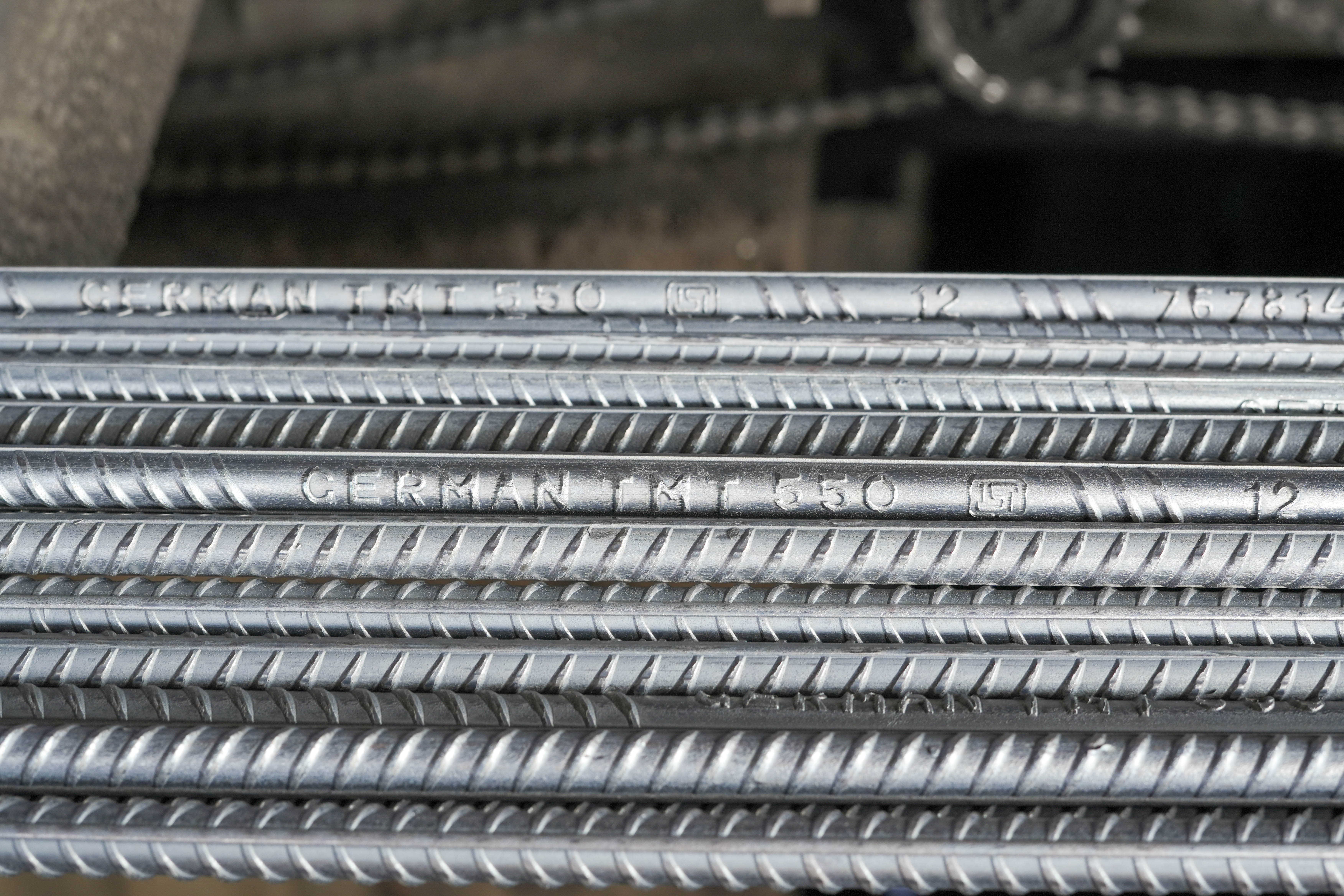
Products such as German TMT Bars, CRS Green Steel, Epoxy Coated TMT Bars, and advanced Cut & Bend solutions can support the varied requirements of modern infrastructure and construction projects.
From large-scale infrastructure development to industrial and commercial construction, the focus is increasingly shifting towards reinforcement solutions that combine performance with efficient manufacturing and responsible resource utilization.
India’s growing steel requirements highlight the importance of strengthening domestic manufacturing capabilities.
A strong domestic steel manufacturing ecosystem can support infrastructure development by improving production capacity, strengthening supply reliability, encouraging technological advancement, and reducing dependence on external supply chains.
Vertically integrated manufacturers can play an important role in this development.
By maintaining greater control across manufacturing processes, steel producers can focus on product consistency, operational efficiency, quality management, and continuous technological improvement.
German Steel operates as a vertically integrated steel manufacturer serving infrastructure, industrial, commercial, and institutional projects across India.
With manufacturing operations in Gujarat and continued investment in technology and modern production capabilities, the company remains focused on supporting the evolving requirements of India’s construction industry.
As India undertakes larger and more complex infrastructure projects, construction efficiency will become increasingly important.
Advanced reinforcement processing technologies can help project stakeholders improve material planning, reduce unnecessary steel wastage, and simplify on-site operations.
German Steel’s advanced Cut & Bend capabilities allow reinforcement steel to be processed according to project-specific Bar Bending Schedules.
Automated cutting and bending can improve dimensional accuracy, optimize material utilization, and reduce the requirement for extensive reinforcement processing at construction sites.
Such technologies demonstrate how steel manufacturers can contribute to construction efficiency beyond the production and supply of conventional reinforcement steel.
India’s growing steel demand also brings greater attention to the environmental impact of industrial production.
As manufacturers increase production capabilities, investments in energy efficiency, renewable energy, resource optimization, and responsible manufacturing practices will become increasingly important.
German Steel continues to strengthen its approach to sustainable manufacturing through renewable energy generation from wind and solar power, Waste Heat Recovery Systems, responsible water management, energy-efficient production, and resource optimization.
These initiatives reflect the broader transition towards manufacturing models that support industrial growth while improving environmental responsibility.
The future of India’s steel industry will depend heavily on continued investment in manufacturing technology.
Automation can help manufacturers improve production consistency, enhance precision, optimize resources, and increase operational efficiency.
From advanced steel production infrastructure to automated reinforcement processing, technology is becoming increasingly important across the steel manufacturing ecosystem.
For manufacturers, continuous investment in technology can strengthen their ability to meet rising demand while maintaining quality and operational reliability.
The World Steel Association’s projection of 7.4% steel demand growth in 2026 and 9.2% growth in 2027 highlights the scale of opportunity ahead for India’s steel industry.
Infrastructure development, construction activity, urbanization, industrial growth, and manufacturing expansion are expected to continue supporting demand for steel.
For steel manufacturers, the next phase of growth will require more than increased production.
Quality, technological advancement, specialized reinforcement solutions, manufacturing efficiency, sustainability, and supply reliability will increasingly determine how effectively the industry can support India’s development.
India’s position as the world’s fastest-growing major steel market reflects the country’s rapidly expanding infrastructure and industrial ambitions.
Meeting this demand will require a strong and technologically advanced domestic steel manufacturing ecosystem.
Through continued investment in manufacturing capabilities, automation, sustainable production, and advanced reinforcement solutions, German Steel remains committed to supporting India’s infrastructure and construction sectors.
As India builds the infrastructure of tomorrow, German Steel continues to focus on delivering quality-driven reinforcement solutions designed for stronger, more efficient, and more sustainable construction.
According to the World Steel Association’s April 2026 Short Range Outlook, India’s steel demand is projected to grow by 7.4% in 2026.
The World Steel Association projects that India’s steel demand will grow by 9.2% in 2027.
Infrastructure investment, construction activity, urban development, industrial expansion, and manufacturing growth are among the major factors supporting India’s increasing steel consumption.
Infrastructure and construction represent major areas of steel consumption in India, alongside engineering, automotive, industrial manufacturing, and other sectors.
German Steel supports infrastructure and construction projects through German TMT Bars, CRS Green Steel, Epoxy Coated TMT Bars, advanced Cut & Bend solutions, modern manufacturing capabilities, and continued investment in sustainable production.
[ Where we share insights, updates, and stories that matter in the world of construction and beyond. ]
Learn how to store TMT bars correctly at construction sites in Gujarat. Explore practical TMT storage, handling and reinforcement management practices for contractors.

Learn how to select TMT bars for high-rise buildings based on strength, ductility, bendability, bonding, corrosion resistance and project requirements.

.jpg)


.webp)