


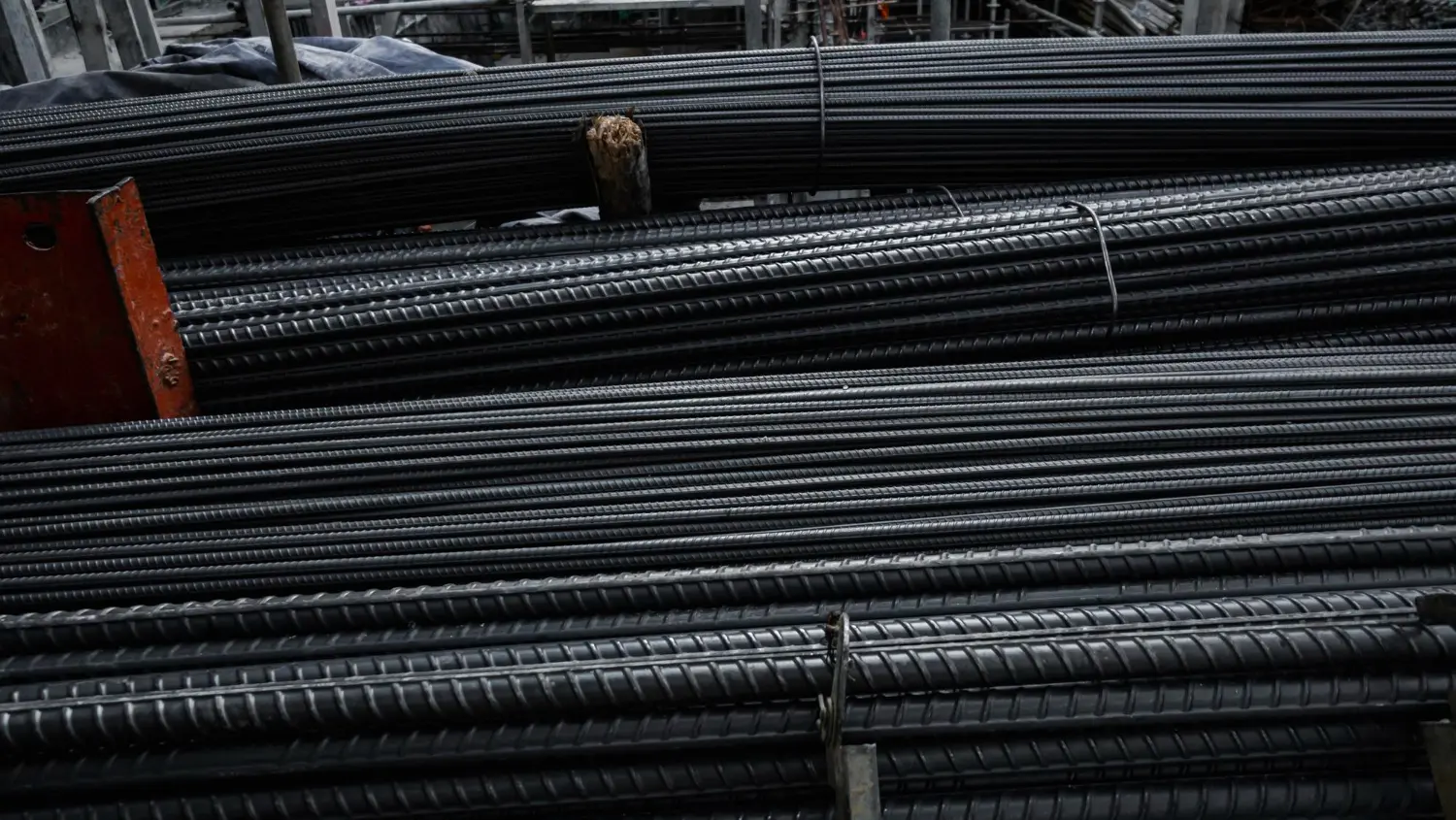
How to Store TMT Bars at Construction Sites in Gujarat: A Practical Guide
September 8, 2026
June 24, 2026
Gujarat has emerged as one of India's most active regions for infrastructure development, industrial expansion, logistics hubs, manufacturing facilities, commercial projects, and urban growth.
As construction activity continues to accelerate, project stakeholders are increasingly looking for ways to improve execution efficiency, optimize resources, and meet demanding project timelines.
One trend gaining momentum across the industry is the adoption of pre-processed reinforcement.
Instead of relying entirely on traditional on-site reinforcement preparation, many large-scale projects are integrating factory-processed reinforcement into their construction workflows. This shift is changing how reinforcement is planned, procured, delivered, and installed across modern construction projects.
Pre-processed reinforcement refers to reinforcement steel that is cut, bent, and prepared according to approved engineering drawings and Bar Bending Schedules (BBS) before reaching the project site.
Rather than receiving standard-length reinforcement and processing it on-site, construction teams receive reinforcement that is already prepared according to project specifications.
Services such as Cut & Bend are playing an increasingly important role in supporting this approach.
Construction projects today face growing pressure to deliver faster while maintaining quality and coordination across multiple stakeholders.
Large projects often involve:
Under these conditions, efficiency becomes increasingly important.
Pre-processed reinforcement helps project teams streamline reinforcement management and improve workflow planning.
One of the primary advantages of pre-processed reinforcement is planning accuracy.
When reinforcement is prepared according to approved project specifications before delivery, teams can improve coordination between engineering, procurement, and execution functions.
Potential benefits include:
As projects become larger and more technically demanding, planning accuracy becomes increasingly valuable.
Traditional reinforcement workflows often involve significant cutting and bending activities at the project location.
While this approach remains common in many projects, large developments are increasingly evaluating alternatives that reduce site-level processing requirements.
Pre-processed reinforcement can help support:
This shift allows project teams to focus more directly on installation activities.
Bar Bending Schedules have become an increasingly important tool in modern reinforcement planning.
These schedules define:
When reinforcement is processed according to approved BBS requirements, project teams can align material preparation more closely with project execution requirements.
This contributes to greater consistency across construction workflows.
Resource optimization is receiving greater attention throughout the construction industry.
Project stakeholders are increasingly looking for ways to:
Pre-processed reinforcement supports these objectives by aligning material preparation with actual project requirements.
As sustainability and efficiency become increasingly important, optimized reinforcement planning continues to gain momentum.
Advancements in reinforcement processing technology are helping accelerate the adoption of pre-processed reinforcement solutions.
Modern processing facilities can support:
These capabilities allow projects to manage reinforcement requirements with greater accuracy and efficiency.
Across Gujarat, investments in modern reinforcement processing infrastructure are helping support the industry's growing demand for scalable construction solutions.
Many projects are moving beyond traditional procurement models and adopting more integrated approaches.
Project stakeholders increasingly evaluate:
as part of a broader project planning strategy.
This integrated approach can help improve coordination between material supply and project execution.
The state's rapid industrialization and infrastructure growth are creating demand for more efficient construction practices.
Projects today are expected to deliver:
As a result, construction methodologies continue to evolve alongside changing project requirements.
Pre-processed reinforcement is increasingly becoming part of that evolution.
As Gujarat continues to attract investment across infrastructure, logistics, manufacturing, and industrial sectors, demand for efficient reinforcement solutions is expected to increase.
Future construction strategies are likely to place greater emphasis on:
These trends are expected to further strengthen the role of pre-processed reinforcement within the construction ecosystem.
Pre-processed reinforcement is becoming an increasingly important component of modern construction projects across Gujarat.
By supporting planning accuracy, reducing site-level processing, improving resource utilization, and enhancing project coordination, solutions such as Cut & Bend are helping construction teams adapt to the growing demands of large-scale development.
As infrastructure and industrial projects continue to expand, pre-processed reinforcement is expected to play an even greater role in shaping the future of construction execution.
Pre-processed reinforcement is reinforcement steel that is cut and bent according to approved project specifications before delivery to the construction site.
Benefits may include improved planning accuracy, reduced site processing, better material utilization, and enhanced project coordination.
A Bar Bending Schedule (BBS) is a detailed document specifying reinforcement dimensions, shapes, quantities, and bending requirements for a project.
Large projects often use pre-processed reinforcement to improve efficiency, planning accuracy, and execution workflows.
Cut & Bend processing prepares reinforcement according to approved specifications before delivery, helping improve installation readiness and project coordination.
[ Where we share insights, updates, and stories that matter in the world of construction and beyond. ]
Learn how to store TMT bars correctly at construction sites in Gujarat. Explore practical TMT storage, handling and reinforcement management practices for contractors.

Learn how to select TMT bars for high-rise buildings based on strength, ductility, bendability, bonding, corrosion resistance and project requirements.


.jpg)


.webp)