

How to Store TMT Bars at Construction Sites in Gujarat: A Practical Guide
September 8, 2026
June 29, 2026
Digital transformation refers to the integration of modern technologies into manufacturing operations to improve productivity, accuracy, operational visibility, and decision-making.
Rather than relying solely on conventional manufacturing methods, modern steel producers are investing in:
These advancements help improve operational consistency while supporting increasingly complex construction requirements.
Modern construction projects demand more than timely material deliveries.
Developers, contractors, consultants, and EPC companies increasingly expect:
Digital manufacturing helps support these expectations by improving communication between production facilities and construction sites.
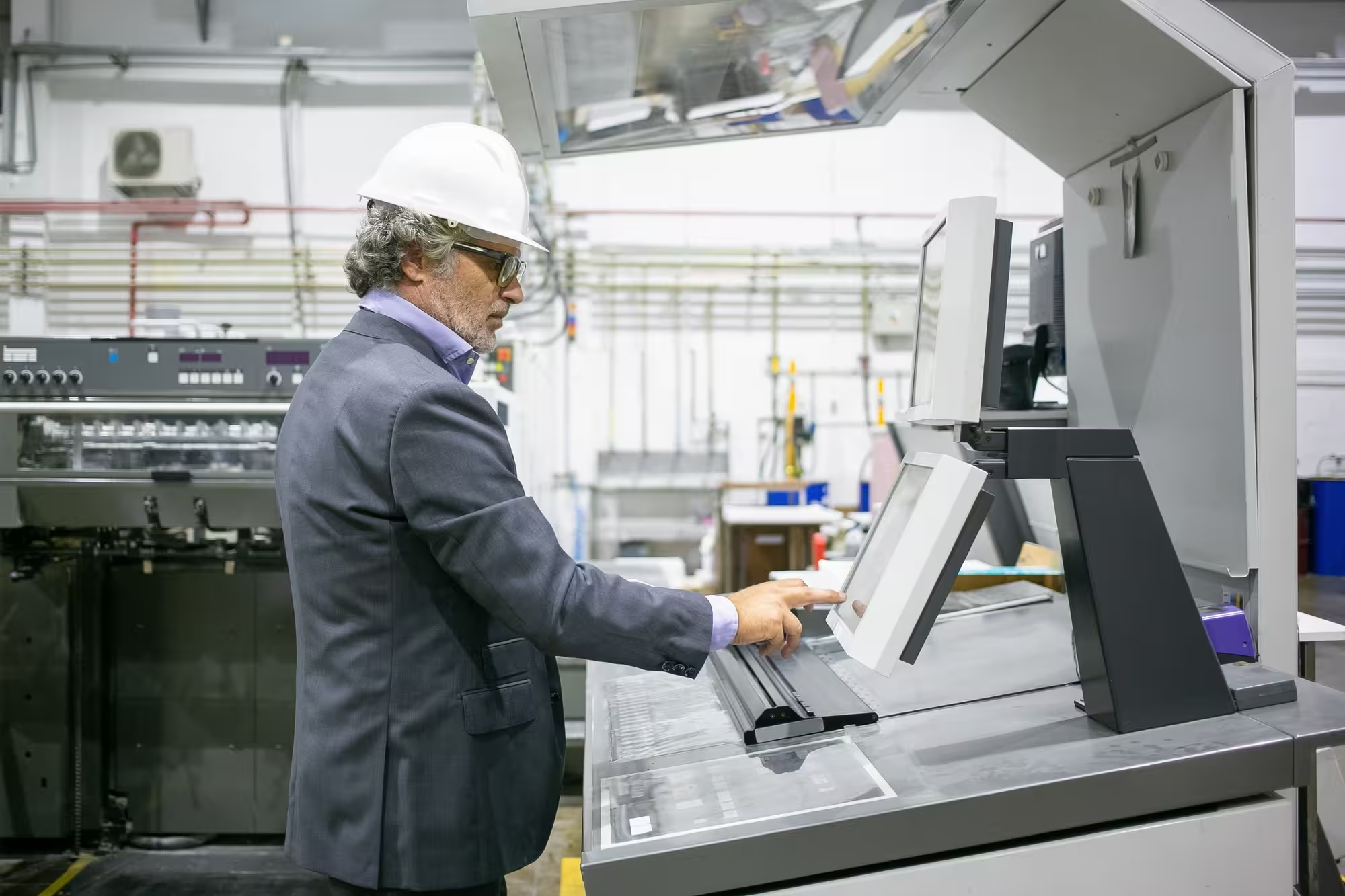
Automation has become one of the biggest drivers of efficiency across the steel industry.
Advanced manufacturing systems help improve:
For reinforcement products such as TMT Bars, maintaining consistency throughout production is critical to supporting engineering and construction requirements.
Technology is also transforming how reinforcement steel is prepared before reaching construction sites.
Advanced Cut & Bend Solutions now utilize automated processing systems capable of producing reinforcement according to approved Bar Bending Schedules (BBS) with high levels of precision.
Compared to traditional processing methods, modern reinforcement processing supports:
As infrastructure projects continue to scale, precision processing is becoming an increasingly important part of construction planning.
Digital tools have significantly improved collaboration between engineering, procurement, manufacturing, and construction teams.
Today, reinforcement planning often begins long before materials arrive on-site.
Digital project workflows help improve:
This integrated approach contributes to smoother project execution across large developments.
Digital transformation is also helping manufacturers improve sustainability.
Modern manufacturing facilities increasingly utilize technology to optimize:
These improvements allow manufacturers to balance productivity with environmental responsibility.
As manufacturing technologies continue to evolve, German Steel has invested in modern production infrastructure designed to support quality, efficiency, and long-term sustainability.
With manufacturing operations in Kutch and Samakhiyali, Gujarat, the company combines advanced manufacturing practices with responsible resource management to produce TMT Bars, CRS Green Steel, Epoxy Coated TMT Bars, and advanced Cut & Bend Solutions.
Its manufacturing ecosystem is supported by renewable energy initiatives including wind and solar power, waste heat recovery systems, dedicated water reserves, and sustainable operational practices that contribute to efficient industrial growth.
The company has also invested in one of Gujarat's largest and most advanced Cut & Bend facilities, enabling high-volume, precision reinforcement processing that supports large infrastructure and industrial projects with improved planning accuracy and execution efficiency.
Smart manufacturing is not simply about automation.
It is about creating connected manufacturing environments where technology supports:
As Industry 4.0 technologies continue to evolve, these capabilities will become increasingly important across the steel sector.
The future of steel manufacturing will be defined by technology, sustainability, and operational excellence.
Manufacturers that invest in automation, digital systems, renewable energy, precision processing, and responsible resource management are better positioned to meet the evolving needs of modern infrastructure and construction projects.
Digital transformation will continue to strengthen collaboration between manufacturers and construction teams, creating more efficient and resilient supply chains.
Digital transformation is reshaping both steel manufacturing and construction.
Through automation, smart manufacturing, digital planning, and precision reinforcement processing, manufacturers are improving productivity while supporting more efficient construction practices.
As infrastructure projects become increasingly sophisticated, manufacturers that embrace technology and sustainability will continue to play an important role in building the next generation of industrial and construction ecosystems.
Digital transformation involves integrating automation, digital systems, and smart technologies into manufacturing operations to improve efficiency, quality, and decision-making.
Automation helps improve production consistency, operational efficiency, quality control, and precision throughout the manufacturing process.
Smart manufacturing combines automation, digital technologies, data, and connected systems to create more efficient and intelligent production environments.
Digital planning improves coordination between engineering, manufacturing, procurement, and construction teams, helping streamline project execution.
German Steel combines advanced manufacturing infrastructure, precision Cut & Bend technology, renewable energy initiatives, waste heat recovery, responsible water management, and modern production practices to support efficient and sustainable steel manufacturing.
[ Where we share insights, updates, and stories that matter in the world of construction and beyond. ]
Learn how to store TMT bars correctly at construction sites in Gujarat. Explore practical TMT storage, handling and reinforcement management practices for contractors.

Learn how to select TMT bars for high-rise buildings based on strength, ductility, bendability, bonding, corrosion resistance and project requirements.

.jpg)


.webp)