

How to Store TMT Bars at Construction Sites in Gujarat: A Practical Guide
September 8, 2026
August 16, 2026
India is building at an extraordinary scale. Highways, bridges, residential developments, industrial facilities, commercial buildings, renewable energy infrastructure and urban projects are creating a sustained demand for reliable reinforcement steel.
Behind every major structure, however, is a manufacturing ecosystem responsible for producing steel that can meet demanding requirements of strength, ductility, consistency and durability.
For German Steel, that ecosystem is rooted in Gujarat.
With a journey that began in 1976, German Steel has developed a strong manufacturing presence in the state, with its vertically integrated facility at Samakhiyali and another manufacturing facility at Viramgam, supported by its corporate office in Ahmedabad. The company's own About Us page describes its manufacturing infrastructure, quality systems and focus on TMT reinforcement.
German Steel's manufacturing operations are strategically positioned to serve the western Indian market while supporting the broader requirements of India's construction and infrastructure sectors.
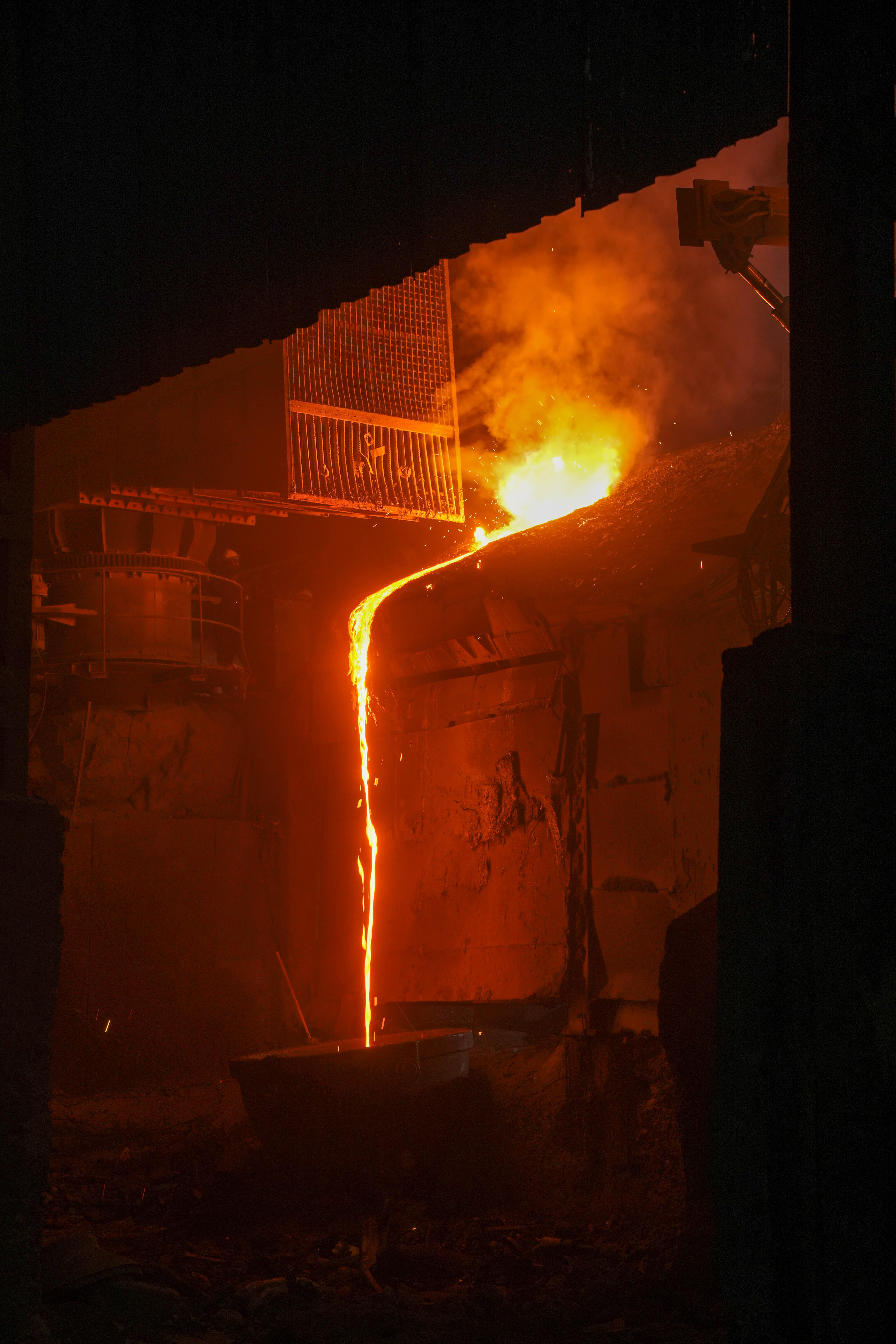
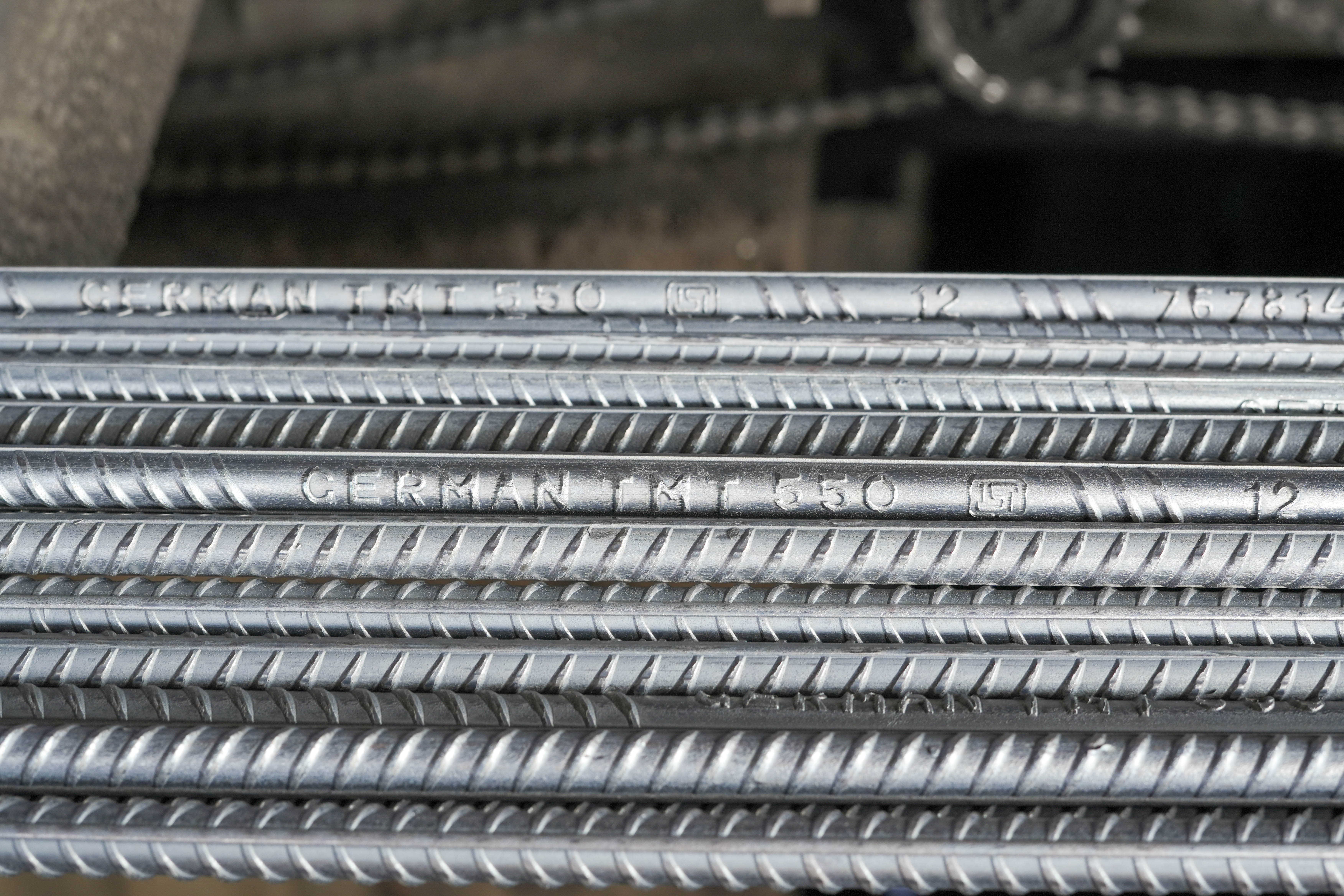
The company's TMT Bars are manufactured using Thermex Quenching Technology, a controlled quenching and self-tempering process designed to develop a combination of strength, ductility, bendability and weldability.
This manufacturing approach is particularly relevant to modern construction, where reinforcement needs to deliver predictable mechanical properties across a wide range of applications.
From residential construction to commercial developments and infrastructure projects, the quality of reinforcement forms an important part of the structural system.
A TMT bar is more than a rolled steel bar.
Its final properties depend on how the steel is processed, controlled and cooled during manufacturing.
German Steel uses Thermex Quenching Technology, based on controlled quenching and self-tempering. According to the company's product information, the process helps enhance yield strength, ductility, bendability and weldability.
The company's TMT technology page also highlights a distinct structure consisting of a tempered martensite outer region and a fine-grained ferrite-pearlite central zone, contributing to the balance of strength and ductility expected from TMT reinforcement.
For buyers, this matters because reinforcement quality begins long before the steel reaches a construction site.
German Steel's manufacturing philosophy is centred around creating a controlled production ecosystem rather than treating TMT bars as an isolated finished product.
The company describes itself as a vertically integrated iron and steel manufacturer with a strong presence in Gujarat and a primary focus on TMT Bars. Its manufacturing facilities are supported by captive power infrastructure, while its quality systems emphasise continuous improvement, customer satisfaction and on-time delivery.
This integrated approach gives German Steel a strong foundation for producing reinforcement at scale while maintaining focus on manufacturing consistency.
Modern steel manufacturing increasingly needs to address not only production and quality but also energy efficiency and environmental responsibility.
German Steel's manufacturing facilities are supported by hybrid wind and solar power infrastructure.
According to the company's Sustainability Initiatives page, its renewable power infrastructure includes wind and solar installations supporting the Samakhiyali and Viramgam facilities. The company reports that, as of December 31, 2024, approximately 67.72% of its energy requirements were met through its own captive power and renewable energy plants.
The company also reports that its renewable power infrastructure helps reduce dependence on the electricity grid and supports continuity during power disruptions while contributing to its sustainability objectives.
German Steel's renewable energy infrastructure includes a hybrid wind-solar setup.
The company's published sustainability information lists 8.10 MW of installed wind capacity and 6.00 MW DC of solar capacity at Bhavnagar, allocated between the Samakhiyali and Viramgam facilities. It also lists additional hybrid wind-solar capacity planned for commissioning at Bharuch.
This is significant because steel manufacturing is energy intensive.
By developing captive renewable energy capacity alongside its manufacturing operations, German Steel is working towards greater energy resilience while reducing dependence on conventional grid electricity.
German Steel's sustainability approach also includes Waste Heat Recovery.
Its corporate website identifies a 4 MW Waste Heat Recovery plant among its captive power infrastructure, alongside its other power-generation assets.
Waste Heat Recovery systems can capture usable energy from industrial processes that would otherwise be lost as heat, improving the overall efficiency of manufacturing operations.
Together with renewable energy, these initiatives form part of German Steel's broader approach to responsible steel manufacturing.
The manufacturing infrastructure supports a portfolio designed for different construction requirements.
Its core German TMT Bars provide reinforcement for a wide range of structural applications.
For projects where additional corrosion protection is required, German Steel offers Epoxy Coated TMT Bars. The company's Fusion Bonded Epoxy process applies dry epoxy powder electrostatically to cleaned hot TMT bars, creating a protective film designed to act as a barrier against moisture, chlorides and chemicals.
The company also manufactures CRS Green Steel, positioned for applications where corrosion resistance and sustainability are important considerations.
And for projects requiring reinforcement prepared according to specific bar bending schedules, Cut & Bend Solutions provide ready-to-install, pre-fabricated reinforcement processed according to customer specifications.
Manufacturing scale matters, but so does quality control.
German Steel states that its facilities and products comply with quality, occupational health and safety, environmental management, and applicable BIS standards, including ISO 9001:2015, ISO 45001:2018, ISO 14001:2015 and BIS 1786:2008 for high-strength deformed steel bars.
These systems provide a framework for maintaining quality and consistency throughout manufacturing operations.
For large construction projects, where reinforcement can represent a substantial volume of material, consistency across production becomes particularly important.
India's infrastructure growth requires more than steel production capacity.
It requires manufacturing systems capable of delivering consistent products, supporting specialised construction requirements, improving resource efficiency and adapting to a more sustainability-conscious industry.
German Steel's manufacturing operations in Gujarat bring these priorities together.
From Thermex-based TMT manufacturing and quality systems to renewable energy, Waste Heat Recovery, Epoxy Coated TMT, CRS Green Steel and Cut & Bend reinforcement, the company's manufacturing ecosystem is designed around the changing needs of India's construction industry.
The story of German Steel is therefore not simply the story of a TMT bar.
It is the story of manufacturing infrastructure built to support the infrastructure India is building next.
German Steel states that it has two manufacturing facilities in Gujarat: one at Samakhiyali and another at Viramgam, with its corporate office in Ahmedabad.
German Steel manufactures its TMT Bars using Thermex Quenching Technology, involving controlled quenching and self-tempering to develop the desired combination of mechanical properties.
Yes. German Steel's manufacturing facilities are supported by hybrid wind and solar power infrastructure. The company reports that approximately 67.72% of its energy requirements were met through its captive and renewable energy plants as of December 31, 2024.
German Steel offers TMT Bars, Epoxy Coated TMT Bars, CRS Green Steel and Cut & Bend Solutions.
German Steel combines TMT manufacturing, quality systems, captive and renewable energy infrastructure, Waste Heat Recovery and value-added reinforcement solutions within its broader manufacturing ecosystem.
The German Steel group traces its origins to 1976, with its current manufacturing operations and product portfolio developed over decades of activity in the steel industry.
[ Where we share insights, updates, and stories that matter in the world of construction and beyond. ]
Learn how to store TMT bars correctly at construction sites in Gujarat. Explore practical TMT storage, handling and reinforcement management practices for contractors.

Learn how to select TMT bars for high-rise buildings based on strength, ductility, bendability, bonding, corrosion resistance and project requirements.

.jpg)


.webp)