

How to Store TMT Bars at Construction Sites in Gujarat: A Practical Guide
September 8, 2026
June 24, 2026
Reinforcement steel is a critical component of most modern construction projects.
Traditionally, reinforcement bars are delivered to site in standard lengths and then processed according to project requirements.
This often involves:
While this approach has been used for decades, it can create challenges when dealing with large reinforcement volumes and complex project specifications.
As projects become larger and more demanding, material utilization becomes increasingly important.
Several factors can contribute to wastage during reinforcement processing.
Common examples include:
Even small inefficiencies can become significant when projects involve thousands of tonnes of reinforcement.
For this reason, project teams are increasingly looking for more structured approaches to reinforcement management.
Cut & Bend Services involve processing reinforcement steel according to approved engineering drawings and Bar Bending Schedules (BBS) before delivery to site.
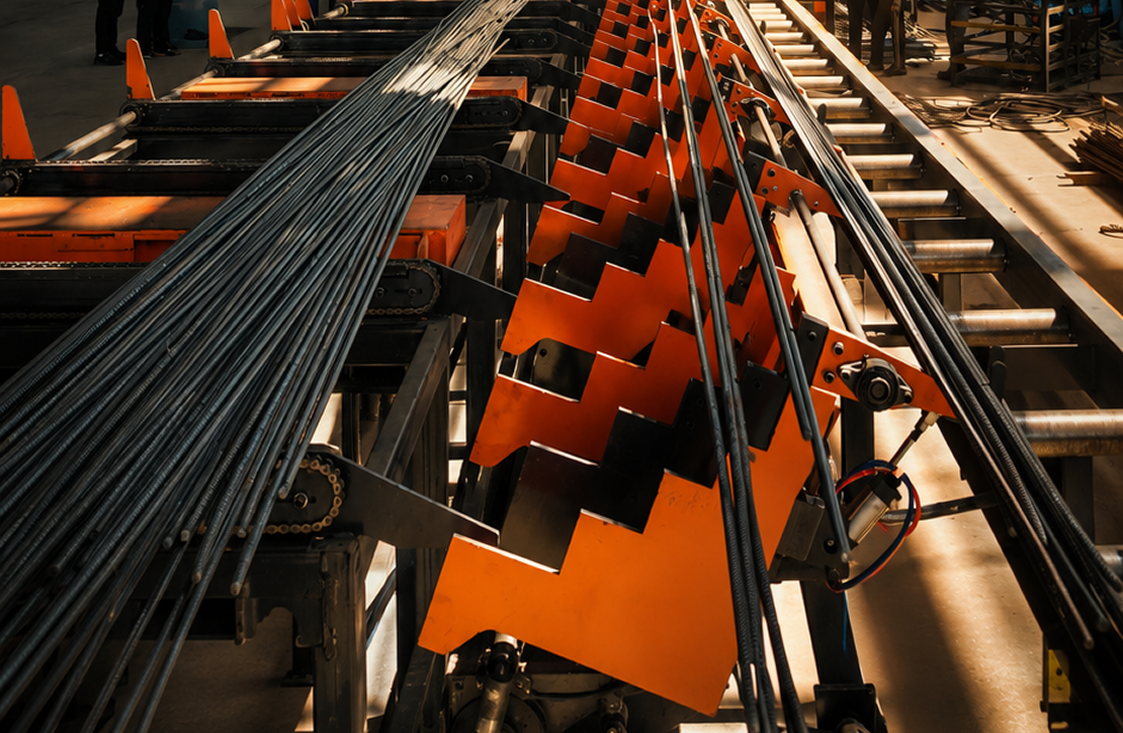
Rather than performing reinforcement preparation at the construction location, steel is cut and bent in a controlled processing environment using specialized machinery and automated systems.
The processed reinforcement is then delivered ready for installation.
One of the biggest advantages of pre-processed reinforcement is alignment between engineering specifications and material preparation.
When reinforcement is processed according to approved project requirements, project teams can improve planning accuracy and material visibility.
Potential benefits may include:
These factors collectively contribute to improved resource utilization.
Bar Bending Schedules play a critical role in modern reinforcement planning.
They define:
When reinforcement processing follows approved BBS requirements, construction teams can improve coordination between design, procurement, and execution.
This level of planning accuracy helps support more efficient material utilization throughout the project lifecycle.
Large construction projects often involve:
Under these conditions, project stakeholders increasingly seek solutions that improve predictability and efficiency.
Pre-processed reinforcement prepared through Cut & Bend Services helps align reinforcement delivery more closely with actual project requirements.
The discussion around Cut & Bend services is not limited to material optimization alone.
Project teams also evaluate benefits such as:
Materials arrive prepared according to project specifications.
Less reinforcement preparation is required at the construction site.
Installation activities can proceed more efficiently when reinforcement arrives ready for use.
Project teams can focus more directly on execution activities rather than processing operations.
As a result, Cut & Bend services are increasingly viewed as part of a broader project efficiency strategy.
Modern reinforcement processing facilities utilize advanced machinery designed to support:
As technology continues to evolve, construction projects are gaining access to more sophisticated reinforcement preparation capabilities.
This trend is helping reshape reinforcement procurement and project execution practices across the industry.
Many projects today evaluate reinforcement solutions through a broader planning lens.
Depending on project requirements, stakeholders may assess:
as part of an integrated reinforcement strategy.
Combining material selection with efficient processing capabilities can help improve coordination throughout the project lifecycle.
As infrastructure and industrial development continue to expand, construction teams are expected to place even greater emphasis on:
This shift is likely to further increase the adoption of pre-processed reinforcement solutions.
Material wastage remains an important consideration for modern construction projects.
By aligning reinforcement processing with approved project specifications, Cut & Bend Services can help improve material planning, reduce unnecessary handling, support construction efficiency, and contribute to more effective resource utilization.
As project complexity continues to increase, reinforcement processing is expected to play an increasingly important role in helping construction teams optimize both materials and execution workflows.
Cut & Bend Services involve processing reinforcement steel according to approved engineering drawings and Bar Bending Schedules before delivery to site.
Cut & Bend Services help align reinforcement processing with project specifications, which can improve material planning and resource utilization.
A Bar Bending Schedule (BBS) is a document that specifies reinforcement dimensions, quantities, shapes, and bending requirements for a project.
Large projects often adopt Cut & Bend solutions to improve planning accuracy, construction efficiency, and project coordination.
Projects may evaluate TMT Bars, CRS Green Steel, Epoxy Coated TMT Bars, and Cut & Bend Services as part of an integrated reinforcement strategy.
[ Where we share insights, updates, and stories that matter in the world of construction and beyond. ]
Learn how to store TMT bars correctly at construction sites in Gujarat. Explore practical TMT storage, handling and reinforcement management practices for contractors.

Learn how to select TMT bars for high-rise buildings based on strength, ductility, bendability, bonding, corrosion resistance and project requirements.


.jpg)


.webp)